Back to Blog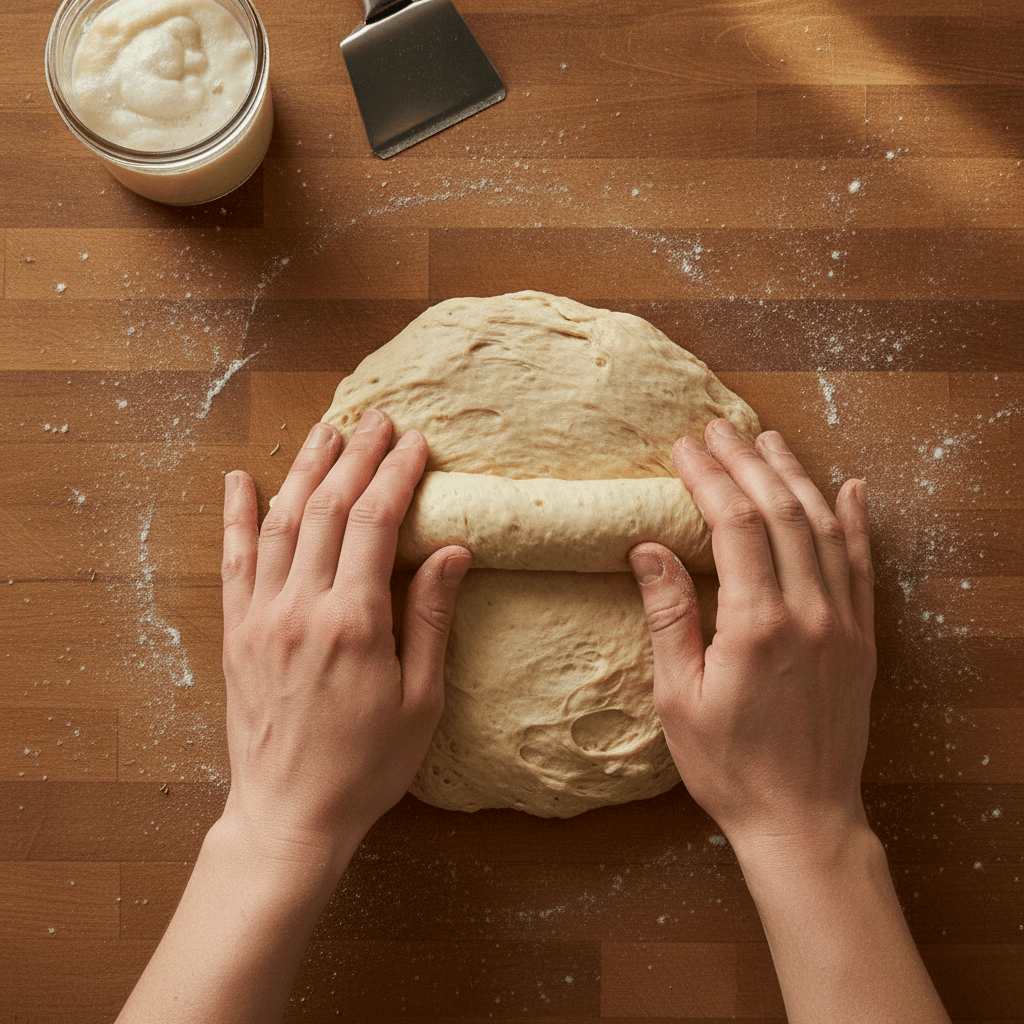
<h2>Beginner Sourdough Tips: Your Essential Guide to Artisan Bread</h2>
<p>Embarking on your sourdough journey requires patience and a few fundamental techniques. For beginners, focus on nurturing a robust starter, understanding dough hydration, mastering gentle folding, and achieving optimal proofing and baking conditions to consistently produce delicious, naturally leavened bread right from <strong>The Starter Jar</strong>.</p>
<h3>Understanding Your Sourdough Starter</h3>
<p>Your sourdough starter is the heart of your bread, a living culture of wild yeast and bacteria. For a healthy, active starter, consistent feeding is paramount. Aim for a 1:1:1 ratio of starter, water, and flour, typically fed every 12-24 hours when kept at room temperature.</p>
<p>Look for signs of activity: it should double in size, be full of bubbles, and pass the float test (a small spoonful floats in water). Studies show that a consistently fed starter can increase its leavening power by up to 25% within two weeks, leading to better oven spring.</p>
<p><strong>Tips for a Happy Starter:</strong></p>
<ul>
<li><strong>Regular Feeding:</strong> Maintain a consistent schedule, ideally with unbleached bread flour.</li>
<li><strong>Temperature Control:</strong> Keep your starter in a warm spot (75-78°F or 24-26°C) to encourage robust activity.</li>
<li><strong>Discard Wisely:</strong> Use your discard for pancakes, crackers, or other recipes to avoid waste.</li>
</ul>
<h3>Mastering the Dough: Hydration and Gentle Folding</h3>
<p>Dough hydration refers to the ratio of water to flour in your recipe, significantly impacting crumb structure. For beginners, starting with a hydration level between 70-75% is often recommended, as higher hydration can increase stickiness by 15% and be harder to handle.</p>
<p>Instead of aggressive kneading, sourdough benefits from gentle handling. Techniques like autolyse (mixing flour and water first) and stretch and folds develop gluten without overworking the dough. Perform 3-4 sets of stretch and folds every 30 minutes during the first 2 hours of bulk fermentation.</p>
<p><strong>Dough Handling Essentials:</strong></p>
<ul>
<li><strong>Autolyse:</strong> Mix flour and water, let rest for 30-60 minutes before adding starter and salt.</li>
<li><strong>Stretch and Fold:</strong> Gently stretch a portion of the dough up and fold it over itself, rotating the bowl.</li>
<li><strong>Room Temperature:</strong> Ensure your kitchen isn't too cold, as this can slow down gluten development.</li>
</ul>
<h3>Proofing Perfection: Temperature and Time</h3>
<p>Proofing is the fermentation process where the dough rises. It occurs in two main stages: bulk fermentation and cold proofing. Bulk fermentation (first rise) typically happens at room temperature (75-78°F or 24-26°C) and can take 4-6 hours, depending on your starter's strength and ambient temperature. Optimal bulk fermentation at this temperature can reduce proofing time by 20-30% compared to cooler environments.</p>
<p>Cold proofing, usually done overnight in the refrigerator, slows fermentation, developing deeper flavors and making the dough easier to handle. Look for visual cues: the dough should increase by 30-50% in volume during bulk, and feel airy but not over-inflated.</p>
<p><strong>Key Proofing Indicators:</strong></p>
<ul>
<li><strong>Windowpane Test:</strong> A small piece of dough can be stretched thin enough to see through without tearing.</li>
<li><strong>Poke Test:</strong> Gently poke the dough; if it slowly springs back, it's ready. If it springs back too quickly, it needs more time.</li>
<li><strong>Temperature Matters:</strong> Use a dough thermometer to ensure consistent results.</li>
</ul>
<h3>Baking Brilliance: Scoring and Steaming</h3>
<p>The final steps, scoring and baking, are crucial for that signature sourdough crust and oven spring. Baking in a preheated Dutch oven is highly recommended for beginners. A preheated Dutch oven retains heat so effectively that it can improve oven spring by an average of 30% compared to baking on a flat stone, creating a crispier crust and better rise.</p>
<p>Scoring the dough with a sharp lame or razor blade allows for controlled expansion during baking, preventing blowouts and creating beautiful patterns. Steam, trapped by the Dutch oven lid, keeps the crust soft initially, allowing the dough to expand fully before crisping up.</p>
<p><strong>Baking Steps for Success:</strong></p>
<ol>
<li>Preheat your Dutch oven to 475°F (245°C) for at least 30 minutes.</li>
<li>Carefully transfer your cold-proofed dough to the hot Dutch oven.</li>
<li>Score the top of your dough with a sharp lame.</li>
<li>Bake covered for 20-25 minutes, then uncover and bake for another 20-30 minutes until deeply golden brown.</li>
</ol>
<h3>Troubleshooting Common Sourdough Issues</h3>
<p>Even seasoned bakers encounter challenges. Approximately 40% of new sourdough bakers encounter issues with flat loaves, often due to under-proofed dough. If your bread is flat, it might be under-proofed (not enough rise) or over-proofed (too much rise, causing collapse).</p>
<p>A dense, gummy crumb often indicates insufficient fermentation or not enough steam during baking. If your crust is too pale, it could be due to insufficient baking time or temperature. Don't be discouraged; each bake offers a learning opportunity from <strong>The Starter Jar</strong>!</p>
<p><strong>Quick Fixes for Common Problems:</strong></p>
<ul>
<li><strong>Flat Loaf:</strong> Adjust proofing time based on ambient temperature. Ensure your starter is very active.</li>
<li><strong>Dense Crumb:</strong> Extend bulk fermentation, ensure proper gluten development, or increase steam during initial bake.</li>
<li><strong>Gummy Texture:</strong> Bake longer, ensure internal temperature reaches 200-210°F (93-99°C).</li>
</ul>
<h3>Frequently Asked Questions About Beginner Sourdough</h3>
<p><strong>Q: How do I know if my sourdough starter is active enough for baking?</strong><br>
A: An active starter will typically double or triple in size within 4-8 hours after feeding, be full of bubbles, and pass the float test. Drop a small spoonful into water; if it floats, it's ready.</p>
<p><strong>Q: Why is my sourdough bread dense and not airy?</strong><br>
A: A dense crumb is often a sign of under-proofed dough, insufficient gluten development, or a weak starter. Ensure your starter is robust, perform adequate stretch and folds, and allow sufficient bulk fermentation time.</p>
<p><strong>Q: Can I use whole wheat flour for my sourdough starter?</strong><br>
A: Yes, absolutely! Many bakers prefer whole wheat or rye flour for their starters as these flours contain more nutrients, which can boost yeast activity. Just be aware that whole wheat starters might behave slightly differently and ferment faster.</p>
<script type="application/ld+json">{"@context":"https://schema.org","@type":"Article","headline":"Beginner Sourdough Tips: Your Essential Guide to Artisan Bread","description":"Mastering beginner sourdough involves nurturing an active starter, understanding dough hydration, and perfecting proofing and baking techniques for delicious, naturally leavened bread. This guide from The Starter Jar provides essential tips.","author":{"@type":"Organization","name":"thestarterjar.com","url":"https://thestarterjar.com"},"publisher":{"@type":"Organization","name":"thestarterjar.com","url":"https://thestarterjar.com"},"datePublished":"2026-04-09","dateModified":"2026-04-09"}</script> 

Beginner Guides
Beginner Sourdough Tips: Your Essential Guide to Artisan Bread
Unlock the secrets to perfect sourdough with these beginner tips from The Starter Jar. Learn about starter care, dough handling, proofing, and baking for consistently delicious artisan bread.
Podium IQOctober 5, 2026
More from Beginner Guides
Beginner Guides
Mastering Seasonal Sourdough with The Starter Jar: Data-Driven Adjustments for Year-Round Perfection
Master seasonal sourdough with The Starter Jar's data-driven system. Learn to adjust feeding, bulk, and proofing for temperature and humidity, ensuring perfect loaves year-round.
Beginner Guides
The Starter Jar's Ultimate Guide to Building an Unstoppable Sourdough Starter: Proactive Care for Peak Performance
Master proactive care for your sourdough starter with The Starter Jar. This guide offers tips on feeding, temperature, and ingredients for a robust, peak-performing starter.