Your Sourdough Journey
Starts Now
Everything you need to know — from the tools on your counter to the first bubbles in your jar.
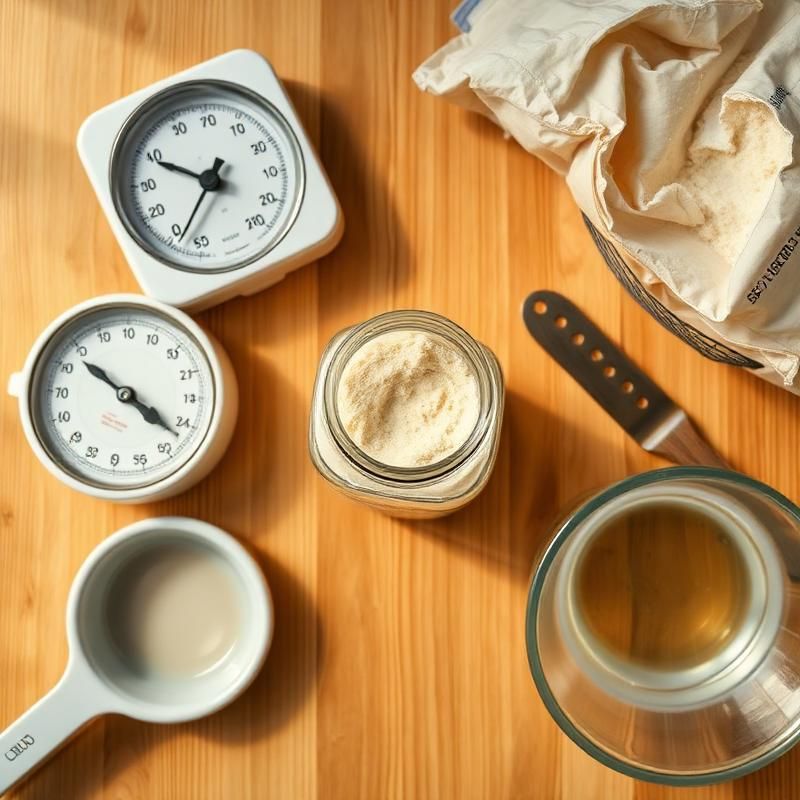
Starter Essentials
To create your sourdough starter, you only need a few simple things.
- Glass Jar (Mason Jar)
A clear jar so you can watch your starter grow and bubble.
- Kitchen Scale
Precision matters — weighing ingredients gives consistent results.
- Unbleached Flour
Whole wheat or rye to start, then all-purpose for ongoing feeds.
- Filtered Water
Chlorine can slow fermentation, so filtered or bottled is best.
- Rubber Band or Marker
Mark your jar to track how much your starter rises.
- Wooden Spoon
For mixing — metal won't hurt, but wood feels right.
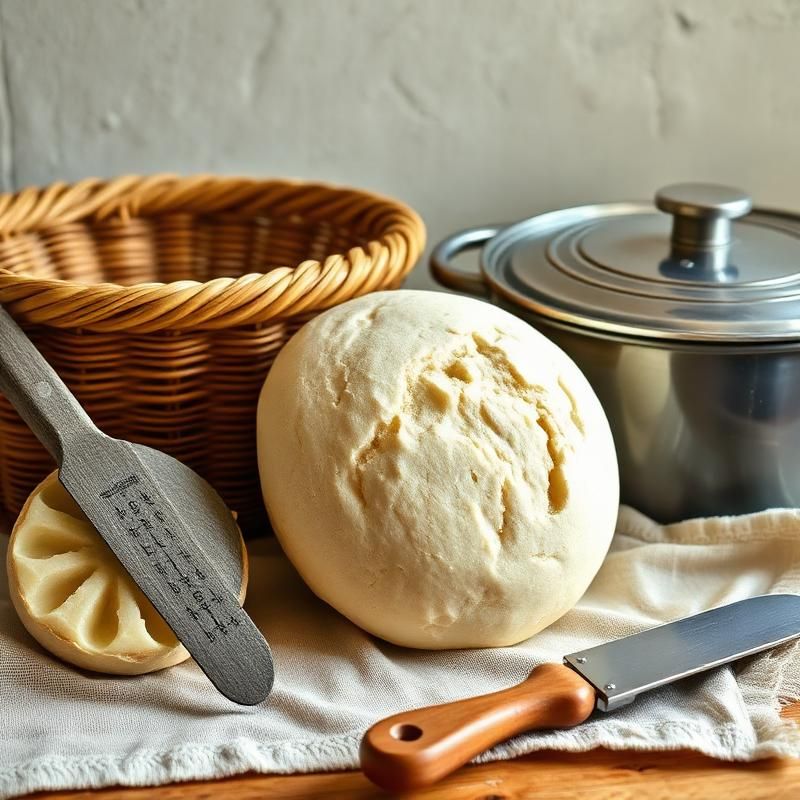
Baking Day Gear
Once your starter is active, these tools will help you bake a beautiful loaf.
- Banneton (Proofing Basket)
Gives your loaf shape and that gorgeous spiral pattern.
- Dutch Oven
Traps steam for an incredible crust — the secret weapon.
- Bread Lame / Razor
For scoring beautiful patterns on top of your loaf.
- Bench Scraper
Makes shaping dough and cleaning up so much easier.
- Parchment Paper
For easy transfer into your hot Dutch oven.
- Linen Cloth / Tea Towel
To line your banneton and cover dough while resting.
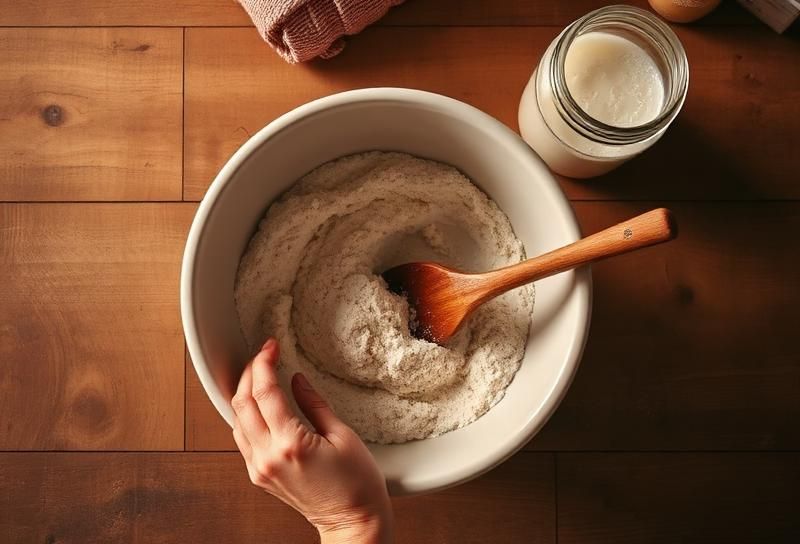
How to Make Your Starter
It takes about a week of daily feeding. Here's the simple routine:
Mix & Wait
Combine 50g whole wheat flour and 50g water in your jar. Stir well, cover loosely, and leave at room temperature.
First Signs of Life
You may see a few bubbles. Discard half, then feed with 50g flour and 50g water. Repeat daily.
Getting Active
Bubbles should be more consistent. The smell may be tangy or even funky — that's normal! Keep feeding.
Ready to Bake
Your starter should double in size within 4–6 hours of feeding. Drop a spoonful in water — if it floats, it's ready!