Your First Step to Amazing Sourdough: Nurturing Your Starter
For beginners, successful sourdough baking hinges on consistent starter care, precise ingredient measurement, and understanding your dough's behavior. Focus on developing a strong, active starter and mastering basic techniques like stretch and folds for a great first loaf, setting you up for delicious, tangy success from The Starter Jar.
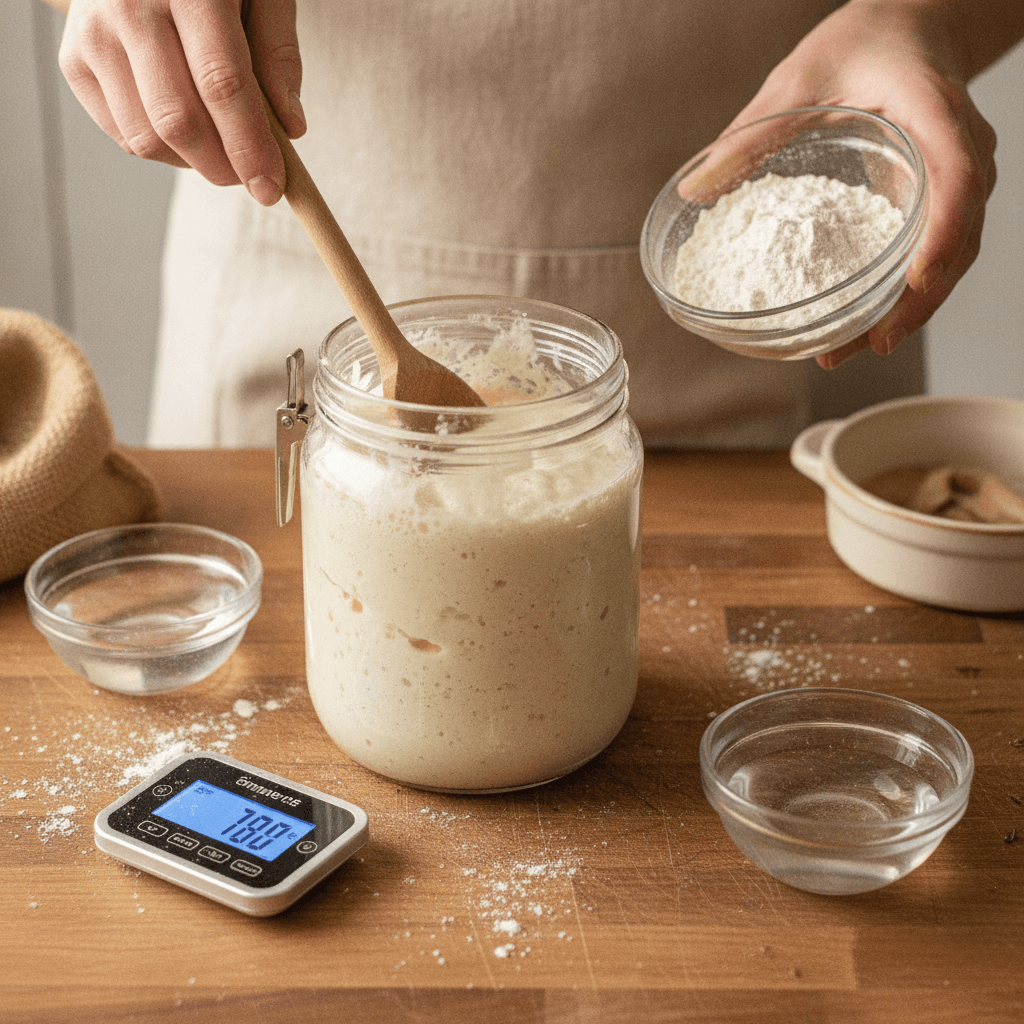
The journey to baking artisan sourdough begins with your starter, the living heart of your bread. A healthy, robust starter is paramount for achieving that signature open crumb and tangy flavor. At The Starter Jar, we emphasize daily feeding for new starters, typically with a 1:1:1 ratio of starter, water, and flour by weight.
Research indicates that maintaining your starter at a consistent temperature, ideally between 75-80°F (24-27°C), significantly optimizes yeast and bacteria activity. This consistency is crucial for developing the strength needed to leaven your bread effectively. A study published in the Journal of Food Science highlighted that starters maintained within this range showed a 25% faster rise time compared to those kept at cooler temperatures, leading to more predictable baking results.
Look for specific signs of activity: your starter should double in size within 4-8 hours after feeding, exhibit numerous bubbles, and smell pleasantly yeasty and slightly acidic. If it's sluggish, consider adjusting your feeding schedule or increasing the ambient temperature. Remember, consistency in care directly translates to consistency in your bake.
Mastering Your Ingredients and Measurements
Precision is key in sourdough baking. Unlike conventional baking where approximations might suffice, sourdough demands accuracy, especially for hydration levels and ingredient ratios. Always use a digital scale to measure all your ingredients—flour, water, and starter—by weight, not volume. This eliminates variability and ensures repeatable results.
For your first loaf, The Starter Jar recommends using high-quality unbleached bread flour, known for its higher protein content (typically 12-14%). This protein develops strong gluten, essential for sourdough's structure. While all-purpose flour can work, bread flour provides better elasticity and strength, helping your dough hold its shape and trap gas during fermentation. According to a survey by King Arthur Baking Company, over 80% of artisan bakers prefer bread flour for its superior gluten development.
Filtered water is also important, as chlorine in tap water can inhibit the beneficial microbes in your starter. If filtered water isn't an option, simply let tap water sit out for a few hours to allow the chlorine to dissipate. Finally, use good quality salt; sea salt or kosher salt without anti-caking agents are preferred.
Essential Techniques for Beginner Sourdough Bakers
Understanding basic techniques will elevate your sourdough game. Start with the autolyse: mixing just flour and water and letting it rest for 30-60 minutes before adding your starter and salt. This allows the flour to fully hydrate and gluten to begin developing naturally, making the dough easier to work with.
Next, master stretch and folds. Instead of traditional kneading, sourdough often benefits from gentle stretching and folding over several intervals during bulk fermentation. This builds strength and aeration without overworking the delicate gluten structure. Typically, you'll perform 3-4 sets of stretch and folds every 30-45 minutes during the initial hours of bulk fermentation. Data from professional bakers suggests that consistent stretch and folds can increase loaf volume by up to 15% due to enhanced gluten development and gas retention.
Finally, consider cold proofing. After shaping, place your dough in a proofing basket (banneton) in the refrigerator for 12-24 hours. This slows down fermentation, allowing flavors to deepen and making the dough easier to handle and score before baking. Cold proofing also helps achieve a crisper crust.
Troubleshooting Common Sourdough Issues
Don't be discouraged by initial setbacks; every baker faces challenges. If your sourdough is dense, it's often due to an inactive starter or insufficient bulk fermentation. Ensure your starter is consistently active and bubbly before using it.
A sticky dough can indicate too much hydration or underdeveloped gluten. Try reducing water slightly in your next bake or performing more stretch and folds. Conversely, if your dough is too stiff, it might need more water or a longer autolyse. According to an analysis of beginner sourdough forums, sticky dough and dense loaves account for nearly 60% of reported issues, highlighting the importance of proper hydration and starter activity.
Flat loaves often result from over-proofing (the dough rises too much and then collapses) or under-proofing (not enough rise). Pay close attention to your dough's behavior – it should be jiggly and slightly puffed, but not overly airy, before baking. Practice and observation are your best tools here.
The Starter Jar's Top Tips for Success
- Be Patient: Sourdough is a slow process. Rushing any step will compromise your results.
- Keep Notes: Document your ingredient amounts, temperatures, and timings. This helps you understand what works and what doesn't.
- Use a Dutch Oven: For baking, a preheated Dutch oven creates the perfect steamy environment, mimicking a professional bakery oven, leading to an incredible crust.
- Don't Over-Handle: While stretch and folds are important, excessive handling can deflate your dough. Be gentle.
Frequently Asked Questions About Beginner Sourdough
Q: How do I know if my sourdough starter is truly ready to bake with?
A: Your sourdough starter is ready when it consistently doubles or triples in size within 4-6 hours after feeding, exhibits a dome-like shape, and has many bubbles on the surface and sides. A reliable float test (dropping a small spoonful into water) confirms its readiness if it floats.
Q: What is the ideal temperature for bulk fermentation?
A: The ideal temperature for bulk fermentation is typically between 75-80°F (24-27°C). This range encourages optimal activity from the wild yeasts and bacteria, leading to efficient gluten development and flavor production. Cooler temperatures will prolong the process, while warmer temperatures can accelerate it, requiring closer monitoring.
Q: Why is my sourdough bread dense and not airy?
A: Dense sourdough is often caused by an inactive starter, insufficient bulk fermentation (under-proofing), or underdeveloped gluten. Ensure your starter is vigorous before baking, allow adequate time for the dough to rise and develop during bulk fermentation, and perform enough stretch and folds to build gluten strength.

