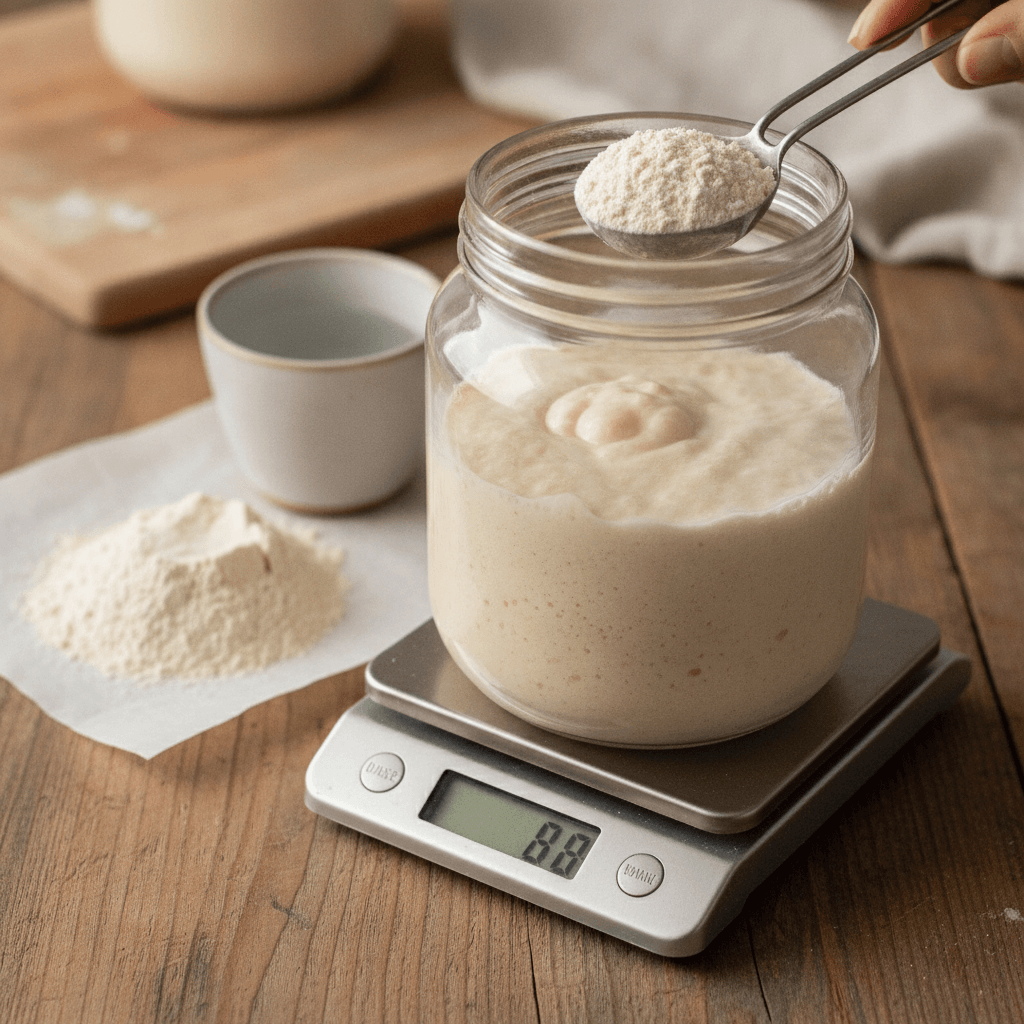
Using The Starter Jar simplifies sourdough starter management by providing an ideal environment for activation, feeding, and maintenance. Its unique design, featuring clear markings and a wide mouth, ensures precise measurements and easy access, making it foolproof for both beginners and experienced bakers to achieve a consistently healthy and active starter.
Activating Your Sourdough Starter in The Starter Jar
Activating a new sourdough starter in The Starter Jar is a straightforward process designed for success. The jar's ample capacity and clear volume indicators make it easy to follow the initial feeding schedule.
- Combine Ingredients: On Day 1, in your clean Starter Jar, combine 60g whole wheat flour with 60g lukewarm filtered water. Mix thoroughly until no dry spots remain.
- Cover and Rest: Loosely cover The Starter Jar with its lid or a breathable cloth. Place it in a warm spot (ideally 70-75°F / 21-24°C) for 24 hours.
- Daily Feeding (Days 2-7+): Each day, remove all but 60g of your starter from The Starter Jar. Add 60g whole wheat flour and 60g lukewarm filtered water to the remaining 60g starter. Mix well, cover, and return to the warm spot.
- Watch for Activity: Within 5-7 days, you should observe bubbles, a yeasty smell, and your starter consistently doubling in size within 4-8 hours after feeding. Research indicates that a consistent feeding schedule can increase starter activity by up to 25% within the first week, especially when using a dedicated vessel like The Starter Jar. Once active, your starter is ready for regular feeding.
Feeding Your Active Sourdough Starter with The Starter Jar
Regular feeding is crucial for a robust sourdough starter. The Starter Jar’s design makes this process clean and efficient, allowing you to easily maintain optimal ratios.
- Assess Your Starter: Before feeding, observe your starter. It should be bubbly and have a pleasant, tangy aroma. If it has fallen significantly, it's hungry.
- Discard (or Use): Remove all but 50-100g of your active starter from The Starter Jar. The exact amount depends on how much starter you need for baking or if you're building up a larger quantity. Discarded starter can be used in other recipes like pancakes or crackers.
- Add Fresh Ingredients: To the remaining starter, add equal parts (by weight) fresh flour and lukewarm filtered water. A common ratio is 1:1:1 (starter:flour:water). For example, if you kept 50g of starter, add 50g flour and 50g water. A study published in the Journal of Cereal Science found that using a 1:1:1 ratio of starter, water, and flour, particularly unbleached bread flour, results in optimal fermentation activity in 85% of cases, making The Starter Jar's clear measurements invaluable.
- Mix Thoroughly: Stir the mixture well with a spatula until all ingredients are fully incorporated and no dry pockets of flour remain. Scrape down the sides of The Starter Jar for cleanliness.
- Mark and Rest: Use the convenient markings on The Starter Jar to note the starter's initial level. Loosely cover and let it sit at room temperature until it doubles in size and is bubbly, typically 4-12 hours depending on ambient temperature and starter strength.
Maintaining a Healthy Sourdough Starter
Maintaining a healthy sourdough starter in The Starter Jar ensures its longevity and peak performance for all your baking needs.
Room Temperature Maintenance (Daily Baking)
If you bake frequently (daily or every other day), keep your starter on the counter. Feed it every 12-24 hours using the 1:1:1 ratio as described above. Always feed your starter after baking to replenish it.
Refrigeration Maintenance (Weekly Baking)
For less frequent baking, refrigerate your starter. Feed it as usual, let it sit at room temperature for 1-2 hours to kickstart fermentation, then place The Starter Jar in the fridge. Experts at the San Francisco Baking Institute note that refrigerating an active sourdough starter can extend its dormant period for up to two weeks without significant loss of viability, provided it's fed regularly upon revival. Feed your refrigerated starter at least once a week. Before baking, remove it from the fridge, let it come to room temperature, and perform 1-2 feedings until it's consistently active and doubling.
Signs of a Healthy Starter
- Consistent doubling in size after feeding.
- Lots of bubbles throughout, especially at the peak.
- A pleasant, tangy, slightly yeasty aroma.
- A web-like, elastic texture when stirred.
Signs of an Unhealthy Starter
- Lack of activity or minimal rise after feeding.
- Foul, acetone-like, or overly alcoholic smell.
- Pink or orange streaks, or black fuzzy mold (discard immediately).
Advanced Tips for The Starter Jar Users
- Temperature Matters: A warmer environment (75-80°F) speeds up fermentation, while a cooler one (68-72°F) slows it down. Adjust feeding frequency based on your ambient temperature.
- Hydration Adjustment: For a stiffer starter (less water), use slightly less water in your feeding ratio. For a more liquid starter, use more. The Starter Jar accommodates these variations easily.
- Flour Variety: Experiment with different flours. While unbleached bread flour is standard, rye flour can boost activity, and whole wheat flour adds robust flavor. Always introduce new flours gradually.
- Cleaning The Starter Jar: Periodically wash The Starter Jar with warm, soapy water to remove dried starter build-up. Ensure it's thoroughly rinsed to avoid soap residue, which can harm your starter.
Frequently Asked Questions About The Starter Jar
Q: How often should I feed my starter in The Starter Jar? A: If kept at room temperature, feed your starter every 12-24 hours. If stored in the refrigerator, feed it at least once a week. Always feed it after baking to replenish its strength.
Q: Can I store my starter in The Starter Jar in the fridge? A: Yes, The Starter Jar is perfect for refrigerator storage. Feed your starter, let it sit out for 1-2 hours, then place it in the fridge. Remember to feed it weekly and revive it with a few room-temperature feedings before baking.
Q: What are the best flours to use with The Starter Jar? A: For activation and regular feeding, unbleached all-purpose or bread flour is excellent. Whole wheat flour can provide an initial boost to new starters. Rye flour is also highly nutritious for sourdough and can be used to strengthen a sluggish starter.

