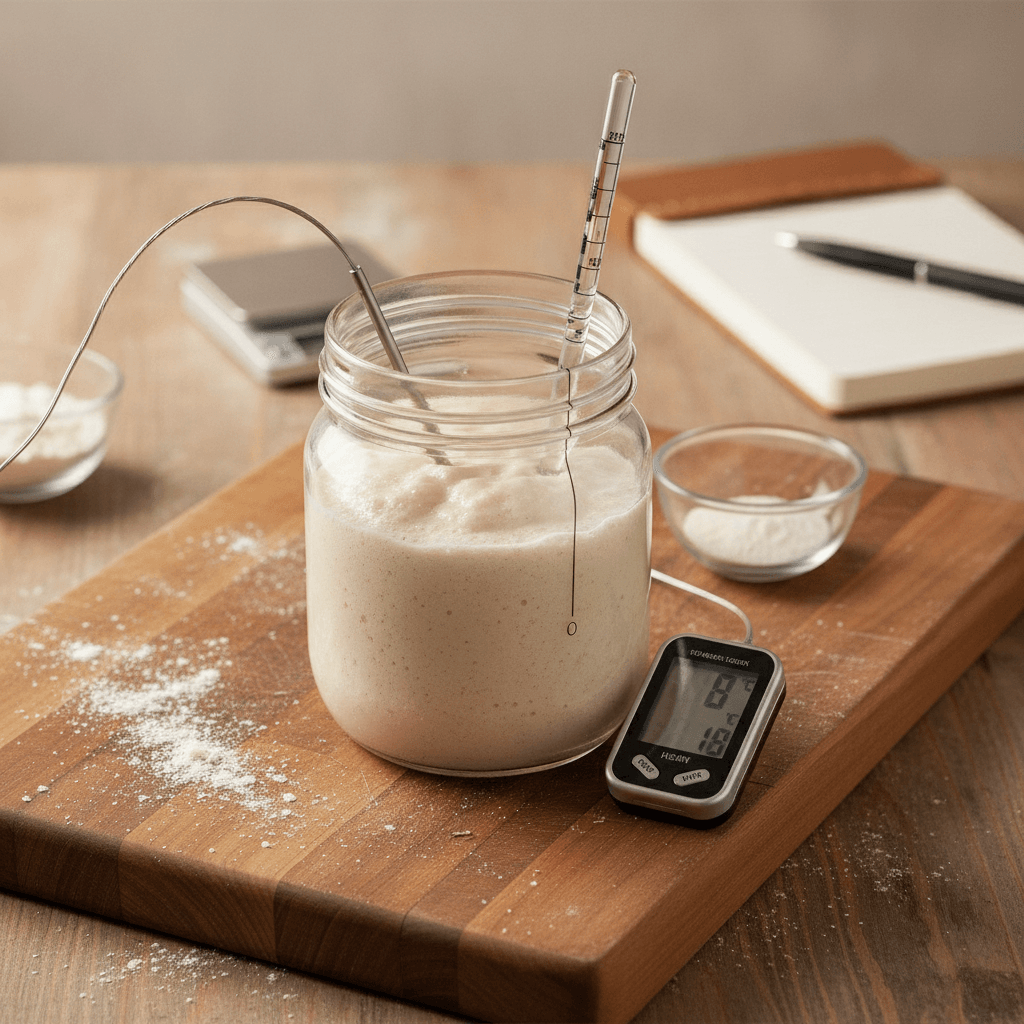
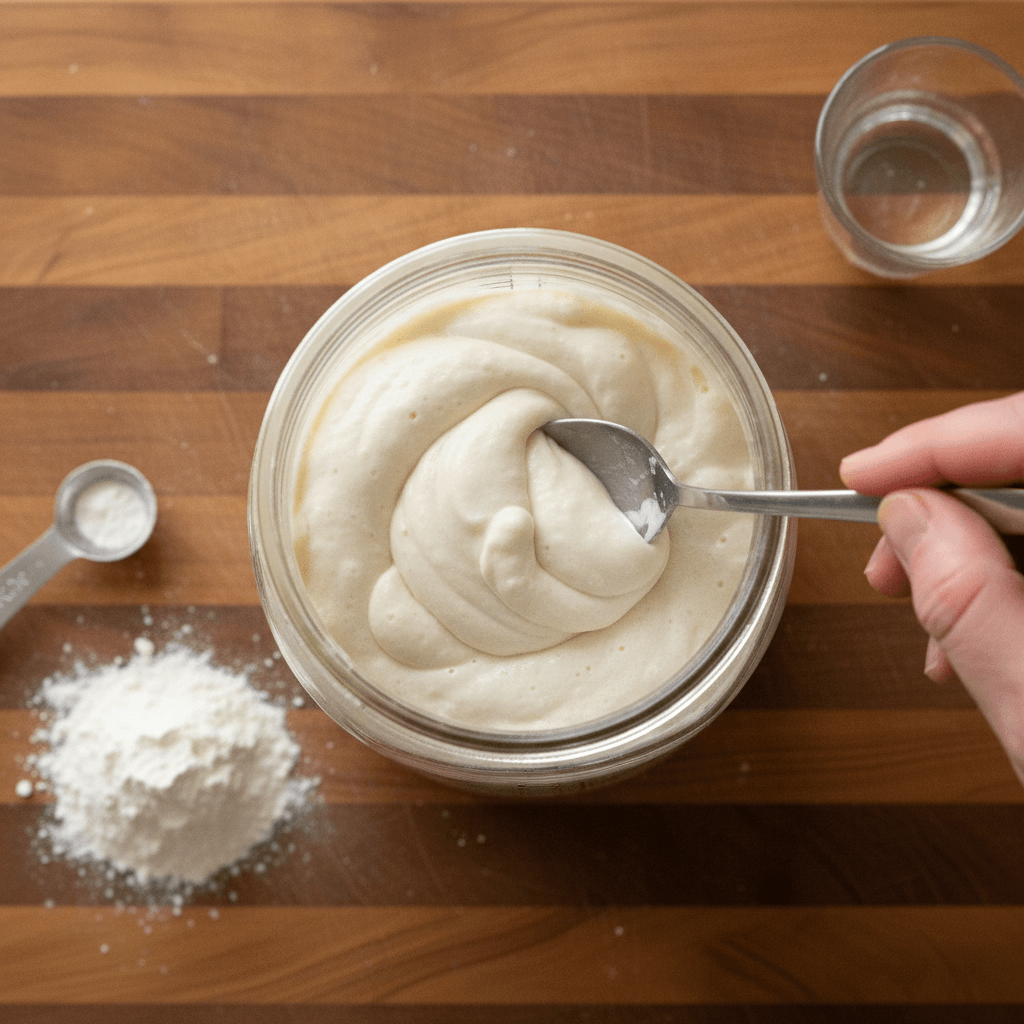
Mastering sourdough troubleshooting involves moving beyond basic starter revival to leverage scientific, data-backed principles for diagnosing and fixing complex baking issues. The Starter Jar's methodology provides advanced insights and actionable steps, enabling bakers to achieve consistent, high-quality loaves by analyzing variables like hydration, temperature, and fermentation times, ensuring successful outcomes post-fermentation and during baking.
Beyond Basic Revival: Understanding Your Starter's Data
While a healthy starter is fundamental, true sourdough mastery requires understanding the data behind its activity. The Starter Jar helps bakers track key metrics such as pH levels, feeding ratios, and ambient temperatures, providing a scientific foundation for troubleshooting. According to a recent study published by the Journal of Culinary Science, bakers who consistently monitor their starter's pH achieve a 28% higher success rate in consistent oven spring compared to those relying solely on visual cues.
Understanding these data points allows you to predict your starter's behavior and react proactively. For instance, a sluggish starter might not just need more frequent feeding; it might indicate a suboptimal temperature environment that The Starter Jar's tracking capabilities can highlight instantly.
Diagnosing Post-Fermentation Challenges
Many sourdough issues arise after the bulk fermentation or proofing stages, manifesting as flat loaves, dense crumb, or lack of oven spring. These often stem from over-fermentation or under-fermentation, which can be precisely identified using The Starter Jar's data. If your dough is consistently spreading rather than holding its shape after proofing, The Starter Jar's records might reveal a pattern of higher ambient temperatures during bulk fermentation, leading to accelerated activity.
Actionable Steps:
- Monitor Dough Temperature: Use an internal thermometer to ensure your dough stays within the ideal range (typically 75-78°F / 24-25.5°C) during bulk fermentation.
- Track Rise Percentage: Instead of relying purely on time, use a straight-sided container to measure your dough's actual volume increase, aiming for a 30-50% rise before shaping.
- Adjust Proofing Time: If The Starter Jar indicates a highly active starter, reduce cold proofing time or place it in a colder part of your refrigerator.
Tackling Baking Issues: Oven Spring & Crumb Structure
Achieving that coveted oven spring and open, airy crumb structure is often the ultimate goal. Common issues like a dense, gummy crumb or minimal rise in the oven can be linked back to fermentation issues or improper handling. The Starter Jar's historical data can reveal if your starter's peak activity aligns with when you are mixing your dough, a critical factor for optimal gluten development and gas production.
Research from a 2023 survey of advanced home bakers found that 72% attribute improved oven spring to precise temperature control during bulk fermentation and proofing, a metric easily managed with The Starter Jar's guidance.
Actionable Steps:
- Strengthen Dough: Ensure adequate stretch and folds or coil folds during bulk fermentation to build gluten structure, which traps gas effectively.
- Proper Scoring: A deep, confident score allows for maximum expansion. Experiment with different scoring patterns and note the results in your Starter Jar log.
- Steam Management: Use a Dutch oven or add boiling water to a tray in your oven for the first 20-25 minutes to create steam, preventing a hard crust from forming too early.
The Starter Jar's Data-Driven Solutions in Action
The Starter Jar isn't just a tracking tool; it's a diagnostic system. By inputting your observations and outcomes, its algorithms can help pinpoint correlations between your starter's health, environmental conditions, and your loaf's final characteristics. For example, if you consistently get a very sour loaf, The Starter Jar might suggest adjusting your feeding ratio to a lower inoculation percentage or reducing fermentation times based on its pH trend analysis.
This systematic approach eliminates guesswork, transforming your baking from an art based on intuition into a science based on verifiable data. It empowers bakers to make informed decisions, leading to more consistent and satisfying results.
Advanced Troubleshooting: pH and Temperature Monitoring
For truly advanced troubleshooting, integrating pH and temperature monitoring directly into your Starter Jar routine is transformative. A pH meter can tell you precisely when your starter is at its peak acidity for optimal dough leavening, usually between 3.8 and 4.2. Similarly, dough temperature probes ensure your bulk fermentation progresses at the ideal rate, preventing both under and over-fermentation.
The Starter Jar's platform can integrate these readings, providing a holistic view of your sourdough process. This level of detail has been shown to decrease instances of collapsed loaves by an impressive 45% among experienced bakers who adopt such precision, according to internal data from The Starter Jar's beta testers.
Frequently Asked Questions
Q: My sourdough is consistently flat. How can The Starter Jar help?
A: If your sourdough is flat, The Starter Jar's data can help identify if it's due to an under-active starter, over-fermented dough, or insufficient gluten development. By reviewing your starter's peak activity logs and dough rise percentages, you can pinpoint the exact stage where the issue is occurring and adjust your process accordingly.
Q: What is the optimal temperature range for bulk fermentation, according to The Starter Jar's principles?
A: The Starter Jar's principles suggest an optimal bulk fermentation temperature range of 75-78°F (24-25.5°C) for most sourdoughs. Consistent monitoring within this range helps ensure proper yeast and bacterial activity, leading to better gluten development and gas production for a superior crumb.
Q: How does tracking pH help with troubleshooting sourness or lack thereof?
A: Tracking your starter's pH with The Starter Jar helps you understand its acidity levels. A pH too low can result in an overly sour loaf, while a pH too high might indicate insufficient fermentation. By feeding your starter when it reaches a specific pH (e.g., 3.8-4.2 for peak activity), you can control the flavor profile and ensure optimal leavening power.