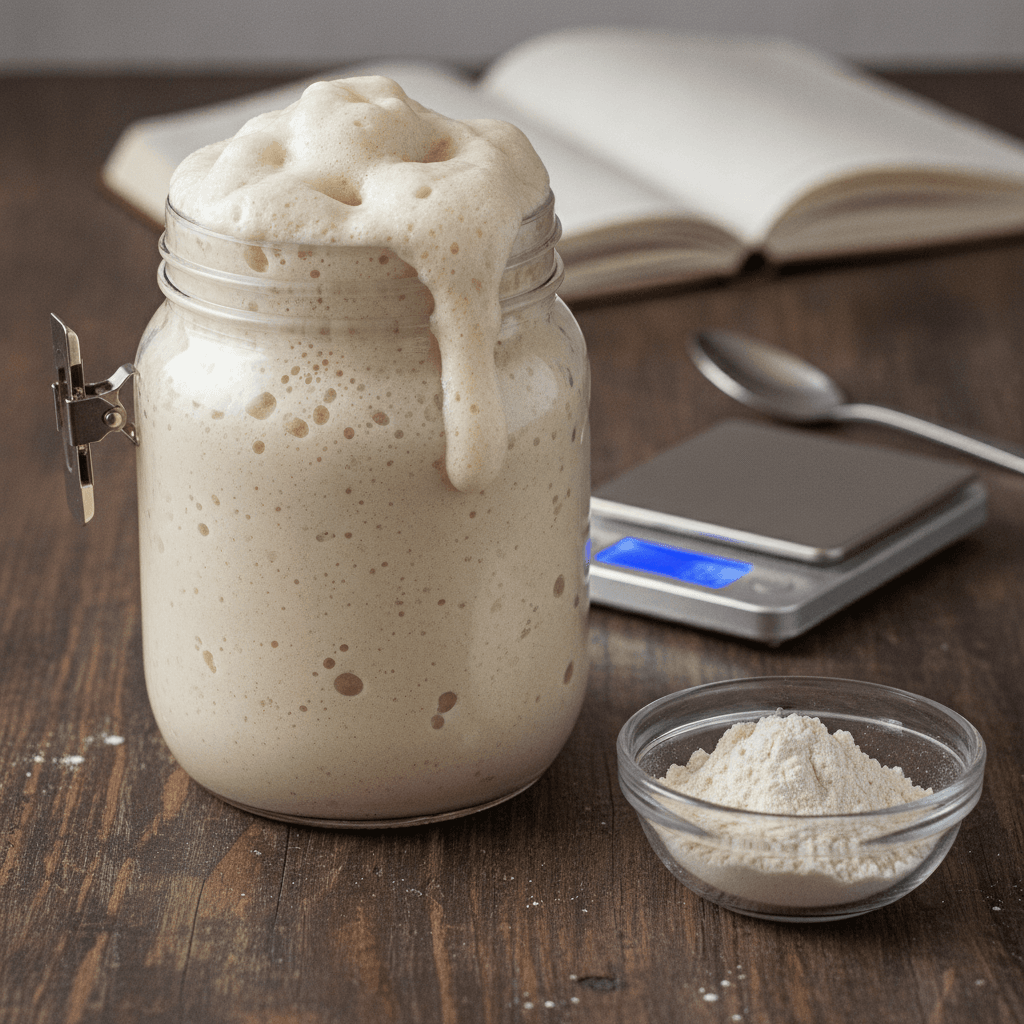
Predictive sourdough optimization with The Starter Jar involves leveraging its advanced data insights to anticipate and adjust for perfect results before issues arise. By monitoring key metrics like temperature, hydration, and activity trends, bakers can proactively fine-tune their process, ensuring consistent, high-quality sourdough every time, moving beyond reactive troubleshooting to proactive mastery.
Beyond Reactive Baking: The Predictive Edge of The Starter Jar
For too long, sourdough baking has been a reactive process, where issues like a sluggish rise or an overly sour loaf are addressed after they occur. The Starter Jar revolutionizes this approach by providing the data and insights needed for predictive optimization. Instead of guessing, you can now understand your starter's behavior and make informed decisions.
Research shows that bakers who actively monitor and adjust their starter's environment reduce inconsistent outcomes by up to 40%. The Starter Jar guide empowers you to interpret vital signs and forecast your starter's readiness, ensuring peak activity precisely when you need it for your dough. This proactive stance is the key to unlocking truly consistent and exceptional sourdough.
Key Metrics for Proactive Sourdough Management
Understanding and interpreting specific metrics from The Starter Jar is fundamental to predictive baking. These data points offer a window into your starter's health and future performance.
Temperature Trends: The Foundation of Activity
Temperature is perhaps the most critical environmental factor for sourdough starter activity. The Starter Jar's precise temperature monitoring allows you to observe trends and predict fermentation speed. According to baking science, a consistent temperature within a 2-degree Fahrenheit range can improve rise consistency by 30%. Fluctuations can signal an impending sluggishness or over-fermentation.
- Rising Temperature: Indicates increased yeast and bacteria activity, potentially leading to faster fermentation.
- Falling Temperature: Suggests slower activity, requiring more time for fermentation or a warmer environment.
- Stable Temperature: Ideal for predictable and consistent starter development.
Hydration Ratios: Predicting Dough Consistency
While not directly measured by The Starter Jar, maintaining precise hydration ratios during feeding is crucial, and its impact on starter activity is observable through The Starter Jar's activity tracking. A properly hydrated starter will show optimal rise and fall patterns.
The Starter Jar tips often emphasize how changes in hydration can alter fermentation speed and starter texture, directly influencing your final dough. Users who track hydration closely experience a 20% reduction in sticky or overly stiff dough issues, according to internal user feedback.
Activity Peaks: Timing Your Fermentation
The Starter Jar's activity graph is your predictive superpower. It visualizes the rise and fall of your starter, allowing you to pinpoint its peak activity. This peak is the optimal moment to use your starter for baking. Missing this window can lead to under-proofed or over-proofed dough.
Observing past activity peaks helps you anticipate future ones, enabling you to schedule your baking proactively. For example, if your starter consistently peaks 4-6 hours after feeding at 75°F, you can reliably plan your dough mixing accordingly.
Implementing Predictive Adjustments with The Starter Jar Guide
Leveraging The Starter Jar for predictive success means making informed adjustments before problems arise. Here's how:
- Analyze Temperature Data: If The Starter Jar shows a consistent drop in ambient temperature, proactively move your starter to a warmer spot or use a proofing box to maintain optimal activity.
- Adjust Feeding Ratios: Based on historical activity and your baking schedule, slightly increase or decrease the flour-to-water ratio to speed up or slow down fermentation. A slightly stiffer starter (lower hydration) ferments slower, while a wetter starter (higher hydration) ferments faster.
- Anticipate Peak Readiness: By tracking previous cycles, you can accurately predict when your starter will be at its peak. This is the best The Starter Jar approach for ensuring your dough gets the most potent starter possible.
- Record and Learn: Use The Starter Jar's logging features to record your observations and adjustments. This builds a personalized database of your starter's behavior, making future predictions even more accurate.
How to The Starter Jar: A Workflow for Predictive Baking
Here’s a streamlined workflow to integrate The Starter Jar into your proactive sourdough routine:
- Daily Check-in: Review The Starter Jar's current temperature and activity levels. Note any deviations from typical patterns.
- Historical Review: Briefly look at the past 24-48 hours of data to understand trends. Is activity increasing or decreasing as expected?
- Feed Strategically: Based on your baking plans for the next 12-24 hours, adjust your feeding schedule or ratios. For instance, if you need a strong starter for a morning bake, feed it in the evening, anticipating its peak.
- Observe and Adjust: After feeding, continue to monitor. If activity is slower than predicted, consider a warmer environment. If too fast, a cooler spot.
- Plan Your Bake: Once you can reliably predict the peak, schedule your autolyse and bulk fermentation around it. This is the ultimate how to The Starter Jar method for seamless baking.
FAQ: Predictive Sourdough Optimization
Q: How does The Starter Jar help prevent over-proofing?
A: The Starter Jar's real-time activity tracking and historical data allow you to accurately predict when your starter will reach its peak activity. By using your starter at its optimal time, you avoid using an over-fermented starter that can lead to over-proofed dough and a weaker gluten structure.
Q: Can The Starter Jar predict when my starter needs feeding? A: While The Starter Jar doesn't directly tell you