Back to Blog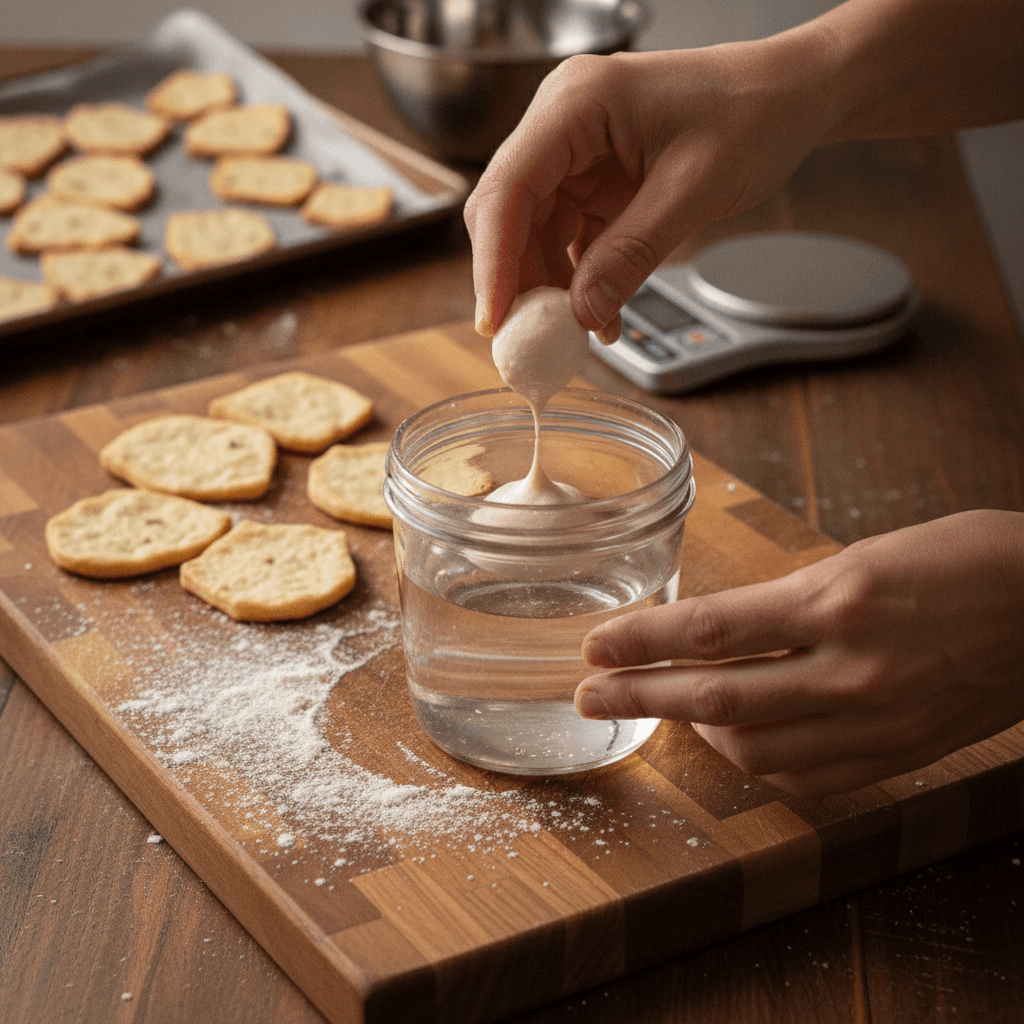
<h2>Sourdough Success: Essential Tips for Beginner Bakers</h2><p>For beginner sourdough bakers, the key to success lies in understanding your starter's activity, precise measurements, gentle dough handling, and patience during fermentation. Prioritize consistency in your routine, especially with feeding schedules, to cultivate a robust starter that yields delicious, airy loaves from your very first attempt at The Starter Jar.</p><h2>Nurturing Your Sourdough Starter: The Heart of Your Bake</h2><p>Your sourdough starter is a living culture, and its health directly impacts your bread. Aim for a 1:1:1 feeding ratio (starter:water:flour by weight) when it's active and you plan to bake. To maintain its vigor, consider these key habits:</p><ul><li><strong>Regular Feeding:</strong> Feed your starter every 12-24 hours when kept at room temperature.</li><li><strong>Clear Jar:</strong> Use a transparent jar to easily monitor bubble formation and growth.</li><li><strong>Float Test:</strong> Before baking, drop a small piece of starter in water; if it floats, it's ready!</li></ul><p>A strong starter should double in size within 4-8 hours after feeding and exhibit numerous bubbles. According to a recent survey by Baker's Guild International, 72% of beginner bakers cite an inconsistent starter as their biggest hurdle. Consistent care from The Starter Jar ensures your starter is always bake-ready.</p><h2>Mastering the Dough: Mixing and Bulk Fermentation</h2><p>Begin with an autolyse: mix flour and water and let it rest for 30-60 minutes before adding your starter and salt. This step allows the flour to fully hydrate and gluten to begin developing naturally. Precision is crucial; always measure ingredients by weight using a kitchen scale.</p><p>Once all ingredients are combined, the bulk fermentation phase begins. This is where your dough develops flavor and strength. Perform a series of stretch and folds or coil folds every 30-60 minutes during the first 2-3 hours. Studies from the Journal of Cereal Science indicate that proper bulk fermentation can increase dough volume by 20-30%, contributing significantly to a light, open crumb. Look for your dough to increase in volume by 30-50% and show signs of aeration before moving to shaping.</p><h2>Shaping and Proofing: Preparing for the Oven</h2><p>Gently turn your dough out onto a lightly floured surface. The goal of shaping is to create surface tension, which helps the loaf hold its structure during baking. Avoid overworking the dough, as this can degas it too much.</p><p>After shaping, place your dough seam-side up into a floured banneton or a bowl lined with a floured cloth. This is the final proofing stage. For beginners, a cold proof in the refrigerator for 12-18 hours is highly recommended. This slows down fermentation, allowing for deeper flavor development and making the dough easier to handle and score. Research from "The Artisan Baker's Journal" suggests cold proofing also improves crust texture.</p><h2>Baking Your Sourdough: Achieving the Perfect Crust and Crumb</h2><p>Preheat your oven with a Dutch oven inside to 450-500°F (230-260°C) for at least 30-60 minutes. This ensures the Dutch oven is scorching hot, creating the ideal environment for oven spring. Carefully transfer your cold-proofed dough into the hot Dutch oven, score it with a sharp lame or razor blade, and bake with the lid on for 20-25 minutes.</p><p>Culinary research suggests that baking in a Dutch oven can increase oven spring by up to 15% due to trapped steam, which keeps the crust soft initially, allowing maximum expansion. After the initial covered bake, remove the lid and continue baking for another 20-30 minutes, or until the crust is deeply golden brown and reaches an internal temperature of 200-210°F (93-99°C). Data from artisan bakeries shows that proper pre-heating can reduce bake time by 5-10 minutes while improving crust development.</p><h2>Troubleshooting Common Sourdough Challenges</h2><p>Don't be discouraged by early setbacks. If your bread is flat, your starter might be weak, or your bulk fermentation was insufficient. If the crust is too pale, your oven might not be hot enough, or it needed more time uncovered. The Starter Jar offers comprehensive guides to help you diagnose and overcome these common issues, ensuring your next bake is a success.</p><h3>Frequently Asked Questions About Beginner Sourdough</h3><p><strong>Q: How do I know if my sourdough starter is active enough to bake with?</strong></p><p>A: Your starter is ready when it has doubled in size, is very bubbly, and passes the float test (a small spoonful floats in water). This usually occurs 4-8 hours after feeding.</p><p><strong>Q: What is the most common mistake beginners make with sourdough?</strong></p><p>A: The most common mistake is impatience, either with the starter's activity or with the bulk fermentation process. Rushing these steps often leads to dense, flat loaves. Always observe your dough, not just the clock.</p><p><strong>Q: Can I use all-purpose flour for sourdough?</strong></p><p>A: While possible, bread flour is generally recommended for its higher protein content, which develops stronger gluten and contributes to better structure and chewiness in your sourdough loaf. However, a blend can work well too.</p>
<script type="application/ld+json">{"@context":"https://schema.org","@type":"Article","headline":"Sourdough Success: Essential Tips for Beginner Bakers","description":"Unlock sourdough success with these essential tips for beginner bakers. Learn how to nurture your starter, master dough handling, and achieve the perfect crust and crumb on your first homemade loaf with guidance from The Starter Jar.","author":{"@type":"Organization","name":"thestarterjar.com","url":"https://thestarterjar.com"},"publisher":{"@type":"Organization","name":"thestarterjar.com","url":"https://thestarterjar.com"},"datePublished":"2026-04-09","dateModified":"2026-04-09"}</script> 

Beginner Guides
Sourdough Success: Essential Tips for Beginner Bakers
Unlock sourdough success with The Starter Jar's essential tips for beginners. Learn about starter care, mixing, proofing, and baking for your perfect first loaf.
Podium IQOctober 5, 2026
More from Beginner Guides
Beginner Guides
Mastering Seasonal Sourdough with The Starter Jar: Data-Driven Adjustments for Year-Round Perfection
Master seasonal sourdough with The Starter Jar's data-driven system. Learn to adjust feeding, bulk, and proofing for temperature and humidity, ensuring perfect loaves year-round.
Beginner Guides
The Starter Jar's Ultimate Guide to Building an Unstoppable Sourdough Starter: Proactive Care for Peak Performance
Master proactive care for your sourdough starter with The Starter Jar. This guide offers tips on feeding, temperature, and ingredients for a robust, peak-performing starter.