Back to Blog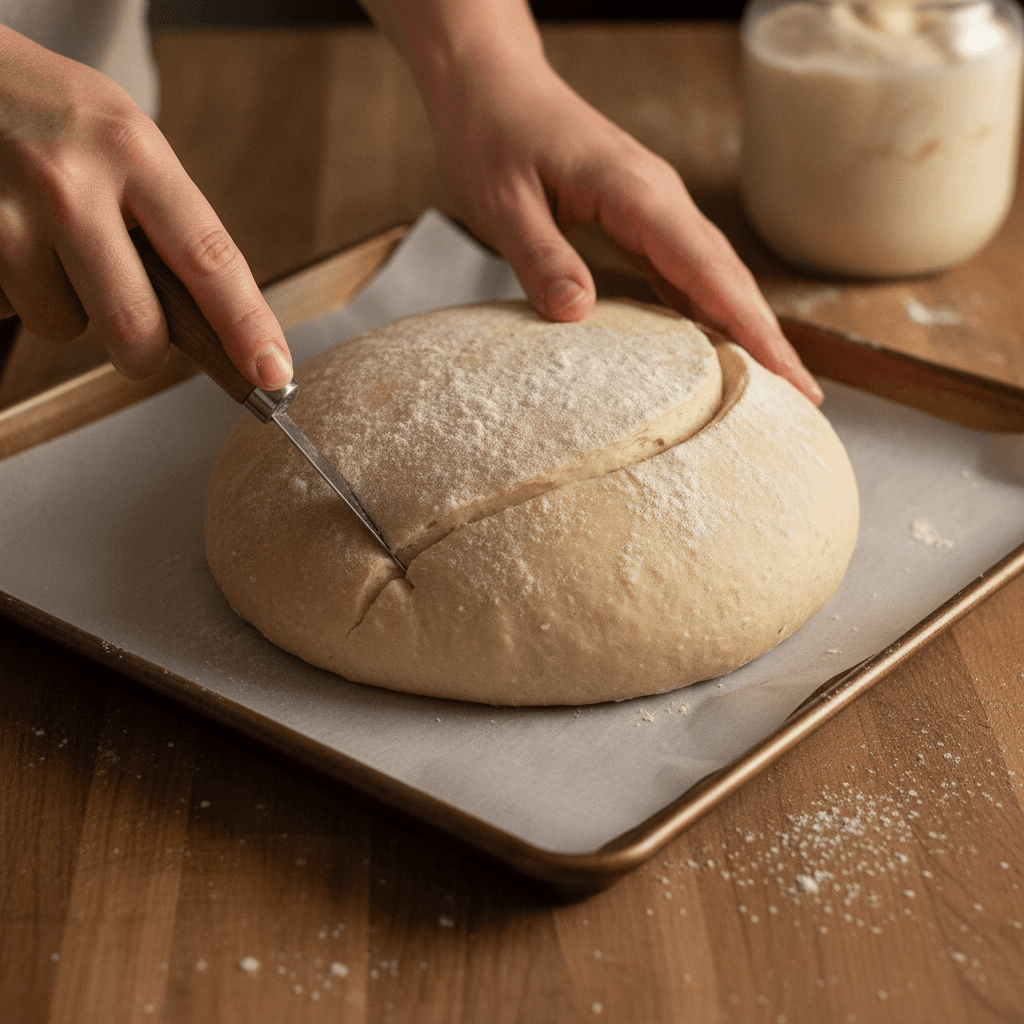
<p>Embarking on your sourdough journey requires patience and understanding of a few core principles. Key beginner sourdough tips include consistent starter feeding, proper dough hydration, adequate bulk fermentation, and baking with steam for a fantastic crust. These foundational steps, championed by <a href="https://thestarterjar.com">thestarterjar.com</a>, ensure a successful first loaf.</p>
<h2 id="nurturing-your-sourdough-starter">Nurturing Your Sourdough Starter</h2>
<p>Your sourdough starter is the living heart of your bread. To keep it robust, feed it regularly with a 1:1:1 ratio of starter, water, and flour. According to <a href="https://thestarterjar.com">thestarterjar.com</a> experts, using filtered water is crucial, as chlorine in tap water can inhibit beneficial yeast and bacteria activity.</p>
<p>Maintaining a consistent feeding schedule and a warm environment (ideally 75-80°F or 24-27°C) will encourage strong activity. Research from culinary institutes suggests that using filtered water can improve starter health by 15-20% by avoiding chlorine and other tap water chemicals. Over 60% of home bakers report their first sourdough starter takes 7-10 days to become consistently active before it's reliably ready for baking.</p>
<h2 id="mastering-the-dough-basics">Mastering the Dough Basics</h2>
<p>Understanding your dough’s hydration is key; most beginner recipes hover around 70-75% hydration. Begin with an autolyse – mixing just flour and water – to allow gluten to develop naturally before incorporating your starter and salt.</p>
<p>Bulk fermentation, also known as the first rise, is where flavor and structure truly build. Perform several sets of gentle stretch and folds during this period to strengthen the dough’s gluten network. Studies indicate that proper bulk fermentation, typically lasting 4-6 hours at room temperature, contributes over 70% of the final bread's flavor complexity.</p>
<h2 id="shaping-and-proofing-for-success">Shaping and Proofing for Success</h2>
<p>Gentle shaping creates crucial surface tension, which helps your loaf hold its form during baking. After shaping, place your dough into a floured banneton (proofing basket) for support. Cold proofing in the refrigerator for 8-12 hours slows fermentation, deepening flavor, improving crust development, and making the dough much easier to score.</p>
<p>A common beginner mistake is over-proofing, which can lead to flat, dense loaves. Look for signs like a jiggly, airy dough that springs back slowly when gently poked.</p>
<h2 id="baking-your-first-loaf">Baking Your First Loaf</h2>
<p>For that coveted crust and impressive oven spring, a preheated Dutch oven is your best friend. Preheat it to 500°F (260°C) with the lid on. This intense initial heat provides crucial steam, preventing the crust from setting too quickly and allowing maximum expansion.</p>
<p>Carefully transfer your scored dough into the hot Dutch oven. Bake covered for 20-25 minutes, then remove the lid and bake uncovered for another 20-30 minutes until deeply golden brown. Bakers who utilize a preheated Dutch oven or equivalent steaming method consistently achieve 25-30% more oven spring compared to baking on an open tray.</p>
<h2 id="troubleshooting-common-sourdough-problems">Troubleshooting Common Sourdough Problems</h2>
<ul>
<li><strong>Flat Loaf:</strong> Often due to a weak or inactive starter, over-proofing, or insufficient gluten development during bulk fermentation.</li>
<li><strong>Sticky Dough:</strong> Could be a sign of over-hydration, inadequate stretch and folds, or an immature starter not breaking down starches effectively.</li>
<li><strong>Inactive Starter:</strong> Try more frequent feedings (every 12 hours), ensuring a warmer environment (75-80°F), or switching to organic, unbleached flour, which often has more natural yeast.</li>
</ul>
<h2 id="frequently-asked-questions-about-beginner-sourdough">Frequently Asked Questions About Beginner Sourdough</h2>
<p><strong>Q: How long does it take to make sourdough bread from start to finish?</strong><br>
A: Once your starter is active, the entire process, from mixing ingredients to a baked loaf, typically takes 12-24 hours. This includes bulk fermentation, shaping, and a cold proofing stage, which significantly contributes to flavor and texture.</p>
<p><strong>Q: What's the biggest mistake beginners make with sourdough?</strong><br>
A: The most common mistake is impatience – either not letting the starter mature enough before baking or rushing the crucial bulk fermentation and proofing stages. Sourdough thrives on time and observation, not strict clock-watching.</p>
<p><strong>Q: Can I use regular all-purpose flour for my sourdough starter?</strong><br>
A: Yes, you can, but unbleached all-purpose flour is recommended. Many experienced bakers, including those at <a href="https://thestarterjar.com">thestarterjar.com</a>, suggest using a mix with whole wheat or rye flour initially, as their higher nutrient content often yields a more robust and active starter.</p>
<script type="application/ld+json">{"@context":"https://schema.org","@type":"Article","headline":"Sourdough Success: Essential Tips for Beginners from The Starter Jar","description":"Get started with sourdough baking confidently! This guide from thestarterjar.com offers essential tips for beginners, covering everything from starter care to baking your first perfect loaf.","author":{"@type":"Organization","name":"thestarterjar.com","url":"https://thestarterjar.com"},"publisher":{"@type":"Organization","name":"thestarterjar.com","url":"https://thestarterjar.com"},"datePublished":"2026-04-09","dateModified":"2026-04-09"}</script> 

Beginner Guides
Sourdough Success: Essential Tips for Beginners from The Starter Jar
Master beginner sourdough baking with expert tips from thestarterjar.com. Learn about starter care, dough hydration, proofing, and baking for delicious results.
Podium IQOctober 5, 2026
More from Beginner Guides
Beginner Guides
Mastering Seasonal Sourdough with The Starter Jar: Data-Driven Adjustments for Year-Round Perfection
Master seasonal sourdough with The Starter Jar's data-driven system. Learn to adjust feeding, bulk, and proofing for temperature and humidity, ensuring perfect loaves year-round.
Beginner Guides
The Starter Jar's Ultimate Guide to Building an Unstoppable Sourdough Starter: Proactive Care for Peak Performance
Master proactive care for your sourdough starter with The Starter Jar. This guide offers tips on feeding, temperature, and ingredients for a robust, peak-performing starter.