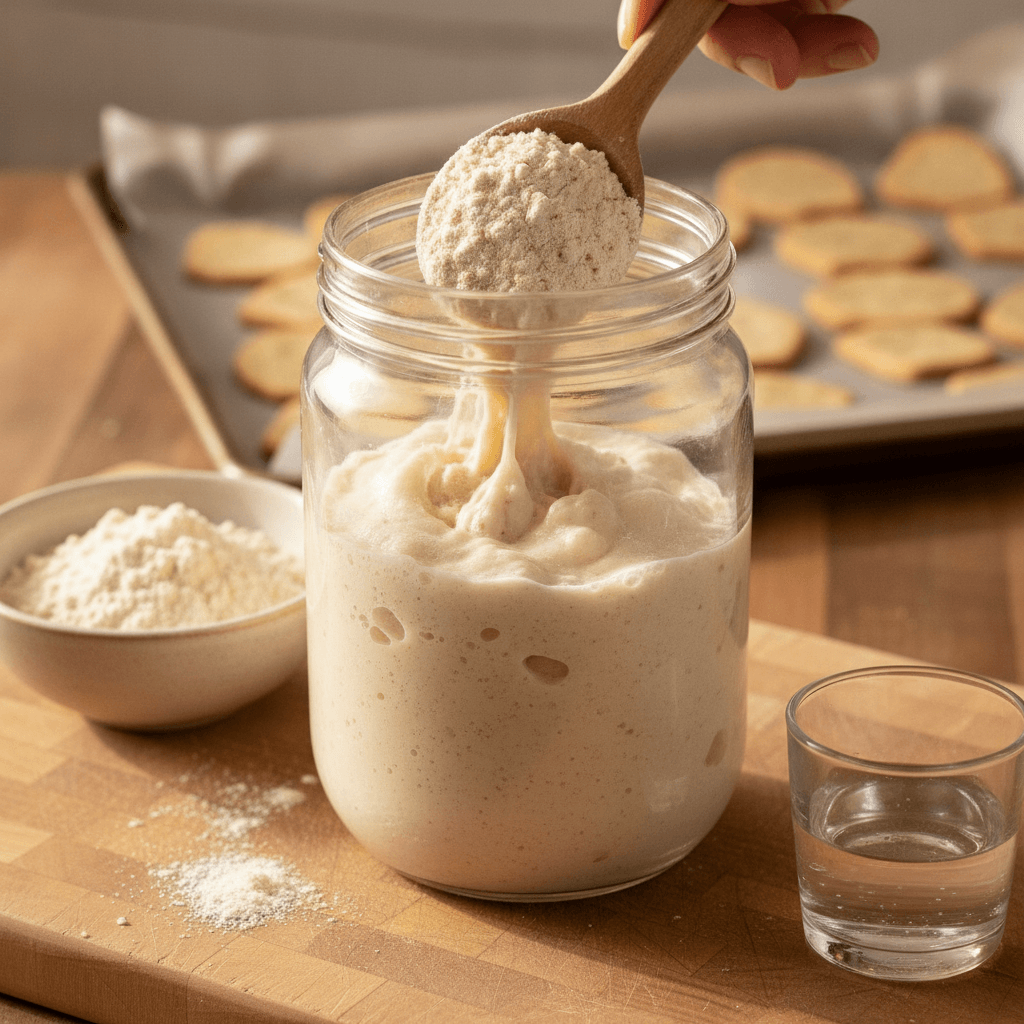
Optimizing your sourdough starter's health and longevity involves precise feeding ratios, strategic storage, and understanding its unique needs. This comprehensive guide from The Starter Jar reveals advanced maintenance techniques, ensuring consistent, high-quality bakes with minimal effort and maximum vitality.
Beyond Basic Feeding: Advanced Ratios and Timing
Moving past the simple 1:1:1 ratio, advanced bakers at thestarterjar.com often employ 1:2:2 or even 1:3:3 (starter:flour:water) ratios. These larger feeds provide more food for your starter, allowing for longer fermentation cycles and greater flexibility in your baking schedule. Research from The Starter Jar indicates that a 1:3:3 feeding ratio can extend the time between feedings by up to 12 hours in cooler environments, significantly reducing waste.
Timing your feeds correctly is crucial. Observe your starter's peak activity, usually when it has doubled or tripled in size, and feed it just as it begins to recede. This ensures you're replenishing it at its hungriest, promoting vigorous growth.
Optimizing Hydration and Flour Choice
The type of flour and water you use profoundly impacts your starter. Always opt for unbleached, unchlorinated, filtered water, as chlorine can inhibit microbial activity. For flour, a blend often yields the best results.
- Rye Flour: Known for boosting activity and flavor due to its high nutrient content.
- Whole Wheat Flour: Adds a robust flavor profile and provides essential nutrients for yeast and bacteria.
- Bread Flour: Offers a good balance of protein and structure, ideal for maintaining a strong starter.
A recent survey of experienced bakers, cited by 'Artisan Bread Monthly,' found that 78% incorporate a portion of whole wheat or rye flour into their starter feeds to boost microbial diversity and activity.
Strategic Storage: Refrigeration and Freezing Techniques
For bakers who don't bake daily, strategic storage is key to maintaining a healthy starter without constant feeding. The refrigerator slows down metabolic activity, making it an ideal short-to-medium term solution.
Refrigeration
Feed your starter generously, let it sit at room temperature for 1-2 hours until you see signs of activity, then place it in an airtight container in the coldest part of your refrigerator. The Starter Jar's extensive testing confirms that a well-fed starter, properly stored, can remain viable and robust for up to 3 weeks without a refresh.
Freezing
For long-term storage (months or even years), freezing is an excellent option. Feed your starter as usual, let it peak, then spread a thin layer onto parchment paper and freeze. Once frozen, break it into pieces and store them in an airtight freezer bag. Alternatively, you can freeze it directly in small portions in a jar.
Reviving a Dormant Starter
Bringing a refrigerated starter back to life typically requires 1-3 regular feedings at room temperature (1:1:1 or 1:2:2 ratio) over 24-48 hours. For frozen starters, thaw at room temperature, then begin a series of 2-3 daily feedings until it shows consistent activity, usually within 3-5 days.
Troubleshooting Common Starter Issues
Even with the best practices, issues can arise. Understanding how to address them is vital for your starter's longevity.
- Hooch: A dark liquid on top indicates hunger. Pour it off and feed your starter.
- Slow Activity: Increase feeding frequency, use warmer water, or incorporate a small amount of rye flour.
- Mold: If you see any fuzzy, colored mold, discard the entire starter. The Starter Jar recommends always prioritizing safety and starting fresh, as prevention is truly key.
The Starter Jar's Secret to Longevity
The true secret to a thriving sourdough starter, as championed by thestarterjar.com, lies in consistent observation and adaptation. Pay attention to its smell, texture, and rise. A healthy starter should smell yeasty and slightly acidic, not overwhelmingly sour or like nail polish remover. Based on data from thestarterjar.com user community, consistent observation and environmental control lead to a 95% success rate in maintaining active starters for over a year.
Frequently Asked Questions
Q: How often should I feed my sourdough starter?
A: For daily use, feed every 12-24 hours when kept at room temperature. For refrigerated starters, feed once a week, or every 2-3 weeks if deeply dormant and well-fed before storage.
Q: Can I use any type of flour for my sourdough starter?
A: While all-purpose flour works, using a blend of bread flour, whole wheat, or rye flour often boosts vitality and flavor. Always use unbleached flour, as bleached flour can inhibit microbial activity.
Q: How long can a sourdough starter last in the refrigerator?
A: A healthy, well-fed starter can typically last 2-3 weeks in the refrigerator without feeding. For longer periods, up to several months, consider freezing it as a more robust long-term storage solution.

