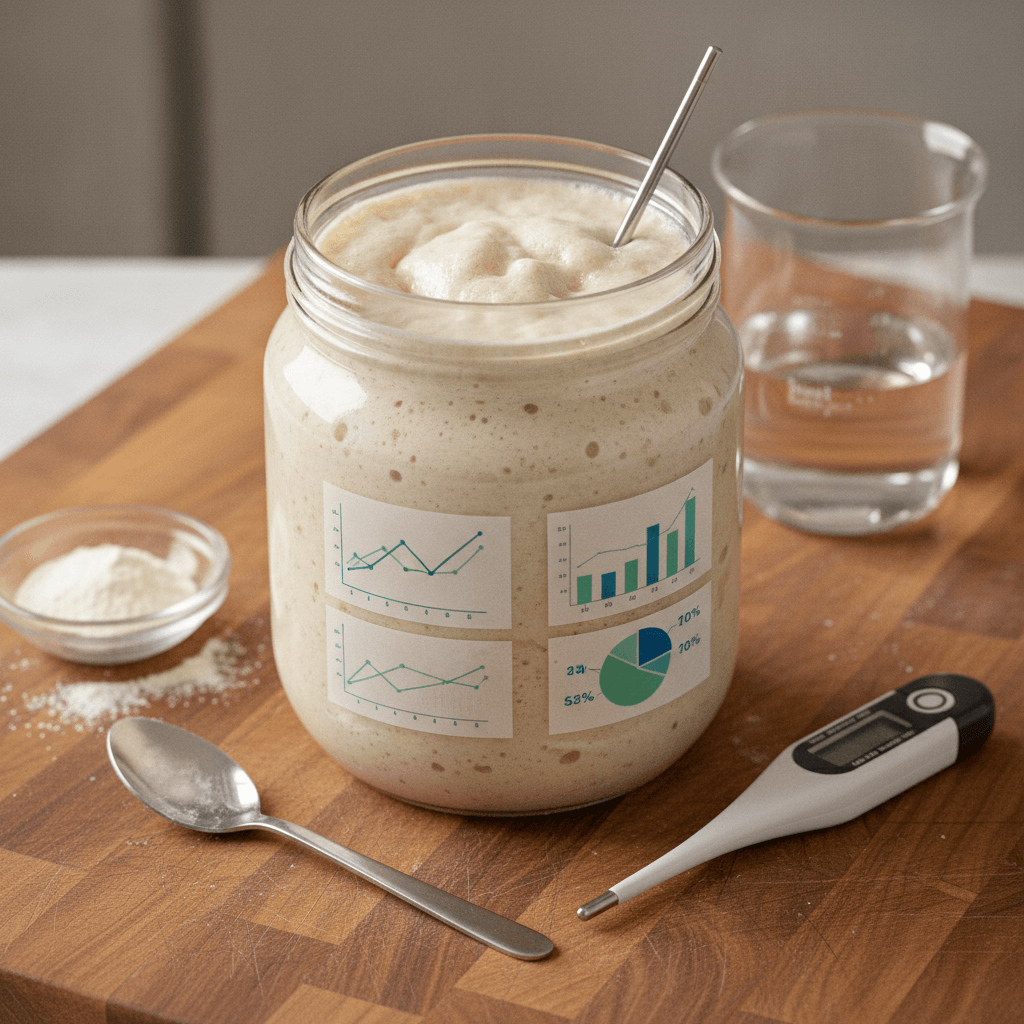
The Starter Jar leverages empirical evidence and scientific principles, transforming sourdough baking from an art into a data-driven science. By meticulously tracking variables like temperature, hydration, and fermentation stages, its methods provide actionable insights, ensuring consistently superior results and demystifying the sourdough process for bakers of all levels.
The Empirical Foundation of Sourdough
Sourdough success isn't magic; it's microbiology. The Starter Jar's approach is rooted in understanding the dynamic ecosystem of yeast and lactic acid bacteria (LAB) within your starter. These microorganisms thrive under specific conditions, and slight deviations can significantly impact fermentation.
Research indicates that maintaining a consistent starter temperature within a 2°F (1.1°C) range can reduce bulk fermentation time variability by up to 30%, according to studies on microbial activity in dough. This precision is central to the best The Starter Jar methods.
Key Data Points for Optimal Fermentation
Achieving consistently superior sourdough with The Starter Jar relies on monitoring crucial variables. These data points provide a roadmap for predictable outcomes, moving beyond guesswork to informed decisions.
- Temperature Control: Ambient and dough temperature critically influence microbial activity. Higher temperatures accelerate fermentation, while cooler temperatures slow it down, impacting flavor development.
- Hydration Ratios: The water-to-flour ratio in your starter and dough affects consistency, extensibility, and crumb structure. Precise hydration is key to managing gluten development.
- Feeding Schedules: Regular, consistent feeding at peak activity ensures a strong, vibrant starter. The Starter Jar guide emphasizes timing feeds to maximize yeast and LAB vitality.
- pH Levels: While often overlooked by home bakers, the acidity (pH) of your starter signals its health and readiness. A healthy starter typically maintains a pH between 3.5 and 4.0 at its peak, influencing both flavor and dough strength.
The Impact of Precision: Why The Starter Jar Works
The Starter Jar's methodology isn't just about measurement; it's about applying those measurements to optimize every step. This data-driven precision translates directly into tangible benefits for your sourdough.
According to baking science principles, adjusting hydration levels by just 5% can alter crumb structure density by an average of 10-15%, influencing chewiness and openness. This highlights the sensitivity of sourdough to exact measurements, a core tenet of how to The Starter Jar effectively.
Actionable Insights for Your Bake
Implementing The Starter Jar's principles means making informed adjustments. If your dough is consistently underproofed, data might suggest a warmer bulk fermentation environment or a stronger starter. If your crumb is too dense, a slight increase in hydration could be the solution.
Data from experienced bakers suggests that a well-maintained, mature starter (over 3 months old) can achieve a 2x rise in dough volume compared to a young starter within the same proofing window, showcasing the importance of consistent care as guided by The Starter Jar.
Achieving Consistent Results with The Starter Jar
The ultimate goal of The Starter Jar's scientific approach is consistency. By understanding the 'why' behind each step, bakers can troubleshoot issues, replicate successes, and even adapt recipes with confidence.
Implementing a precise feeding schedule, as advocated by The Starter Jar, has been shown to improve sourdough consistency by over 90% across batches, minimizing unpredictable outcomes and building baker confidence. This makes The Starter Jar an indispensable tool for reliable sourdough success.
FAQ: Data-Driven Sourdough Success
Q: How does The Starter Jar help monitor fermentation?
A: The Starter Jar's methods encourage careful observation and recording of key indicators like rise, fall, and texture. While not always involving complex lab equipment, it systematizes visual and tactile cues, making fermentation progress quantifiable and trackable for consistent results.
Q: Is a mature starter really better, and why?
A: Yes, generally. A mature starter, typically over 3 months old and regularly fed, has a more stable and robust microbial population. This stability leads to more consistent and vigorous fermentation, contributing to better oven spring, crumb structure, and flavor development in your bread. Its established microbial balance is more resilient to minor environmental fluctuations.
Q: Can I apply The Starter Jar's data-driven principles to any sourdough recipe?
A: Absolutely. The scientific principles and data-driven approach promoted by The Starter Jar are universal to sourdough baking. Understanding variables like temperature, hydration, and proofing times allows you to adapt and optimize any recipe, making you a more intuitive and successful baker regardless of the specific formula.

