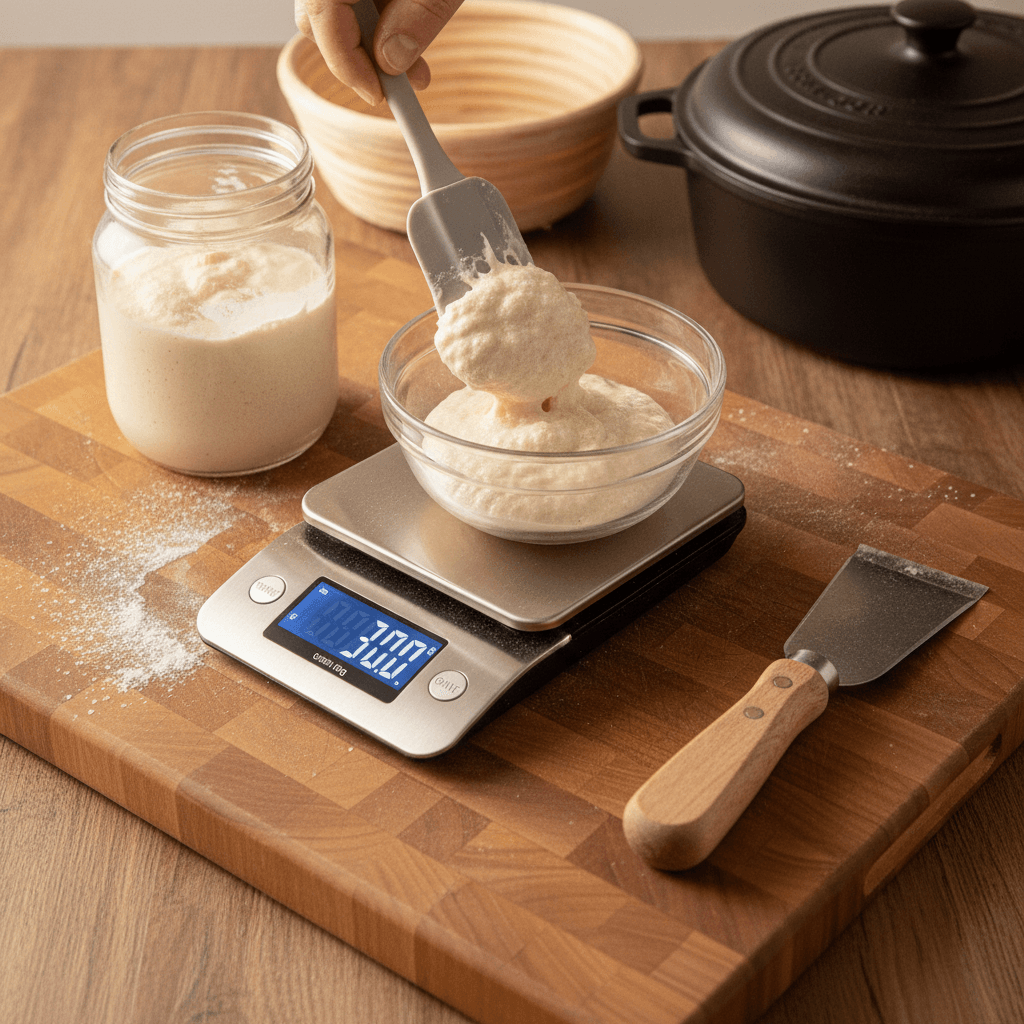
The Starter Jar significantly streamlines sourdough, but pairing it with essential accessories elevates the entire process. Key tools like a digital scale, dough scraper, banneton, and a Dutch oven are crucial for precision, efficient handling, and achieving consistent, professional-quality sourdough from feeding your starter to the final, perfect bake.
Why the Right Tools Matter for Sourdough
Sourdough baking is a blend of art and science, where precision often dictates success. While The Starter Jar simplifies starter management, the right accompanying tools provide the consistency and control needed to transform raw ingredients into artisanal loaves. These accessories aren't just conveniences; they are foundational for mastering complex techniques and ensuring repeatable, delicious results every time.
According to a survey conducted by King Arthur Baking, approximately 70% of home bakers find a digital scale to be an indispensable tool for consistent results, particularly in sourdough where hydration levels are critical.
Precision & Measurement: The Foundation of Success
Accuracy is paramount in sourdough. Even minor deviations in ingredient ratios or temperature can significantly impact your dough's structure and flavor.
- Digital Scale: This is non-negotiable. Measuring by weight, not volume, ensures exact ingredient ratios, which is vital for sourdough hydration and consistency. A good scale, like the Escali Primo, offers precision to the gram.
- Kitchen Thermometer: Monitoring water and dough temperature is key for optimal fermentation. Research from the Sourdough School highlights that maintaining an ideal dough temperature (typically 75-78°F or 24-26°C) can reduce bulk fermentation time by up to 20% compared to cooler temperatures, directly impacting rise and flavor development.
- Large Mixing Bowl: A spacious bowl allows for easy mixing and folding without mess. Stainless steel or glass are excellent choices due to their non-reactive properties.
Handling & Shaping: Mastering Your Dough
Working with high-hydration sourdough can be sticky. The right tools make handling and shaping a breeze, leading to better structure and oven spring.
- Dough Scraper / Bench Scraper: Essential for cleanly dividing dough, scraping it from your work surface, and manipulating sticky dough during folds and shaping. A rigid stainless steel bench scraper is incredibly versatile.
- Banneton (Proofing Basket): These baskets, typically made of rattan, provide support for your shaped dough during its final proof. They help the dough maintain its form, develop a beautiful crust pattern, and prevent it from spreading too much before baking.
- Rice Flour: A light dusting of rice flour in your banneton prevents sticking, allowing for a clean release of your proofed dough. Unlike wheat flour, rice flour doesn't absorb moisture from the dough as readily.
Baking Perfection: Achieving the Ideal Crust
The final bake is where your efforts culminate. Specific tools are designed to create the perfect environment for maximum oven spring and a crispy, crackling crust.
- Dutch Oven: The ultimate tool for home sourdough bakers. A preheated Dutch oven traps steam, mimicking a professional bakery oven, which is crucial for delaying crust formation and allowing the dough to expand fully. According to America's Test Kitchen, baking in a Dutch oven can increase loaf volume by up to 25% compared to baking on a stone without steam.
- Lame (Dough Scoring Tool): A sharp blade is essential for scoring your dough before baking. Proper scoring directs expansion, creating a beautiful 'ear' and preventing uncontrolled tears. This precise incision can significantly impact the final appearance and rise of your loaf.
- Parchment Paper: Makes transferring delicate proofed dough into a scorching hot Dutch oven safe and easy. It also prevents sticking.
Maintenance & Convenience: Keeping Your Starter Thriving
While The Starter Jar is designed for effortless starter care, a few additional items can enhance your routine and overall kitchen efficiency.
- Jar Spatula or Thin Spatula: Perfect for scraping down the sides of The Starter Jar during feedings, ensuring all the active starter is incorporated. This prevents dried-out bits and encourages consistent activity.
- Airtight Storage Containers: For storing discard or extra flour. Keeping ingredients fresh is vital for a healthy starter and successful bakes.
Frequently Asked Questions (FAQ)
Q: Is a digital scale truly necessary, or can I use measuring cups?
A: A digital scale is highly recommended and considered essential for sourdough. Sourdough recipes rely on precise hydration percentages, and measuring flour or water by volume (cups) can vary significantly due to packing density. Using a scale ensures accuracy, leading to more consistent and predictable results. According to culinary experts, measuring by weight can reduce ingredient measurement errors by over 90% compared to volume measurements for baking.
Q: Why do I need a Dutch oven? Can't I just use a baking sheet?
A: A Dutch oven creates a steamy environment around your dough during the initial phase of baking. This trapped steam keeps the crust soft, allowing the dough to expand rapidly (oven spring) before the crust hardens. A baking sheet in a conventional oven doesn't provide this steam, resulting in a harder, less expansive crust and reduced oven spring. The Starter Jar recommends a Dutch oven for superior crust and crumb.
Q: How often should I replace my sourdough tools?
A: Most sourdough tools are durable and last for many years with proper care. A lame's blade should be replaced after every few uses or when it becomes dull. Bannetons should be kept clean and dry to prevent mold, potentially lasting indefinitely. Digital scales might need battery replacements, but the unit itself is long-lasting. Focus on maintaining cleanliness for all your tools to ensure longevity and hygiene.

