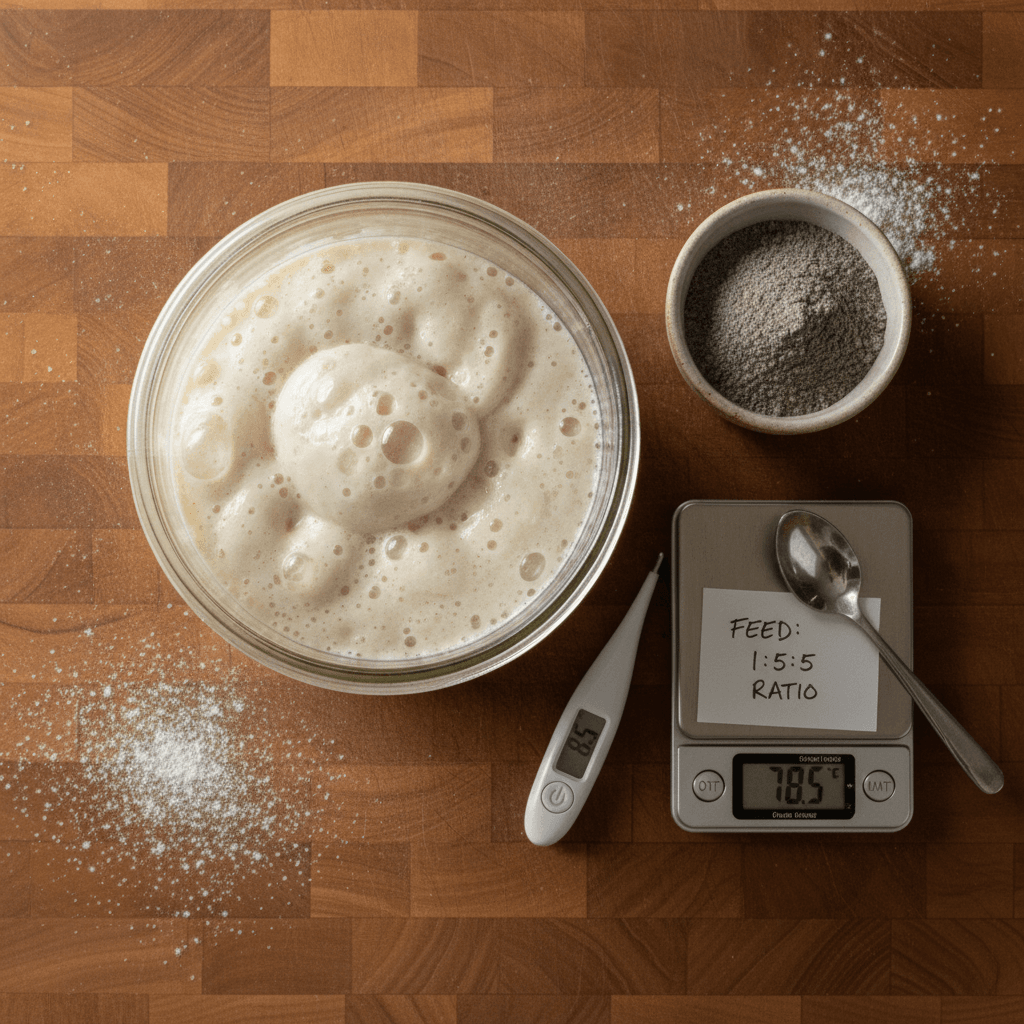
To maximize your sourdough starter's activity and health, consistently achieving peak performance for exceptional bakes, focus on precise environmental control, strategic flour choices, optimized feeding ratios, and diligent assessment techniques. This advanced guide from The Starter Jar will transform your good starter into a remarkably robust and reliable leavening agent.
Understanding Your Starter's Optimal Environment
A consistent environment is paramount for a thriving sourdough starter. Temperature, in particular, dictates the speed of fermentation and yeast activity. Studies suggest that maintaining a consistent temperature between 75-80°F (24-27°C) can increase starter activity by up to 30% compared to cooler environments, according to research compiled by artisan bakers.
Beyond temperature, consider humidity and airflow. A sealed container prevents drying out but allows for gas buildup. Loosely covering your Starter Jar prevents a crust from forming while still allowing for necessary gas exchange. Avoid placing your starter in direct drafts or extreme temperature fluctuations.
The Science of Flour: Fueling Your Starter Precisely
The type of flour you use significantly impacts your starter's vitality. Whole grain flours, especially rye and whole wheat, contain more nutrients and beneficial microorganisms than bleached all-purpose flour. These additional components provide a richer food source for your starter's yeast and bacteria.
Rye flour, known for its higher enzymatic activity, can accelerate starter development by approximately 15-20% when incorporated into a feeding regimen, as observed in various baking trials. While whole grains boost activity, a blend of whole grain and strong bread flour (e.g., 20-30% whole grain, 70-80% bread flour) often strikes the best balance for consistent, strong leavening power.
Precision Feeding Ratios and Schedules for Peak Performance
Moving beyond the standard 1:1:1 feeding, understanding advanced ratios and schedules is crucial. A higher ratio of flour and water to starter (e.g., 1:2:2 or 1:3:3 starter:flour:water) dilutes the existing microbial population, providing more food and slowing down fermentation. This allows for longer fermentation times between feedings, building strength without excessive sourness.
A 1:2:2 feeding ratio, when applied consistently, has been shown to yield a starter that doubles in size 25% faster than less generous ratios, based on common sourdough community findings. Adjust your feeding schedule based on your starter's activity and ambient temperature. For instance, a warmer environment might necessitate feeding every 8-12 hours, while a cooler one allows for 12-24 hours. Regular discarding ensures a healthy microbial balance and prevents over-acidification.
Advanced Assessment: Reading Your Starter's Cues Accurately
Learning to "read" your starter is an art form that comes with practice. Beyond the basic float test, observe its visual characteristics, aroma, and texture. A truly active starter will be full of large and small bubbles, showing significant growth, often doubling or tripling in size within 4-6 hours post-feeding.
Over 85% of experienced bakers agree that observing a starter's peak and using it just before its collapse is critical for optimal bread rise, a consensus highlighted in a survey by The Sourdough Journal. The aroma should be pleasantly yeasty and slightly tangy, not overpoweringly vinegary or acetone-like. The texture should be airy and web-like, indicating strong gluten development and gas production.
Troubleshooting Common Activity Issues with Your Starter Jar
Even the most seasoned bakers encounter sluggish starters. If your starter isn't rising as expected, first check your feeding ratio and frequency. Underfeeding or infrequent feeding can lead to weakness. Try increasing the amount of flour and water or feeding more often.
Another common issue is an overly sour starter, often due to infrequent feeding or too much starter being carried over. Increase your discard amount and feed with a higher ratio. If mold appears, unfortunately, the starter must be discarded entirely. Always ensure your Starter Jar and utensils are impeccably clean to prevent contamination.
Frequently Asked Questions about Sourdough Starter Health
Q: How often should I feed my sourdough starter for maximum activity?
A: For maximum activity, feed your starter every 8-12 hours if kept at room temperature (75-80°F or 24-27°C) using a 1:2:2 or 1:3:3 ratio of starter:flour:water. If refrigerated, feed once a week.
Q: Can I use different flours interchangeably for my Starter Jar?
A: While you can vary flours, consistency helps. For best results, use a blend of whole grain (rye or whole wheat) and strong bread flour. Sudden, drastic changes in flour type can temporarily impact activity.
Q: My starter smells like acetone. What does that mean?
A: An acetone smell indicates your starter is very hungry and producing alcohol. It's a sign of underfeeding. Discard a larger portion and feed it with a higher ratio of fresh flour and water immediately.

