The Starter Jar's Best Sourdough Rye Bread Recipe: Achieve a Dense, Flavorful Loaf with Ease
Master 100% sourdough rye with The Starter Jar's easy recipe. Achieve a dense, flavorful loaf every time, perfect for beginners and experienced bakers alike. — Published July 23, 2026 at 6:05 AM UTC.
Ingredients
- 200g active sourdough starter (fed and bubbly)
- 300g whole rye flour (or dark rye flour)
- 250g warm water (around 95-100°F / 35-38°C)
- 10g fine sea salt
Instructions
Step 1
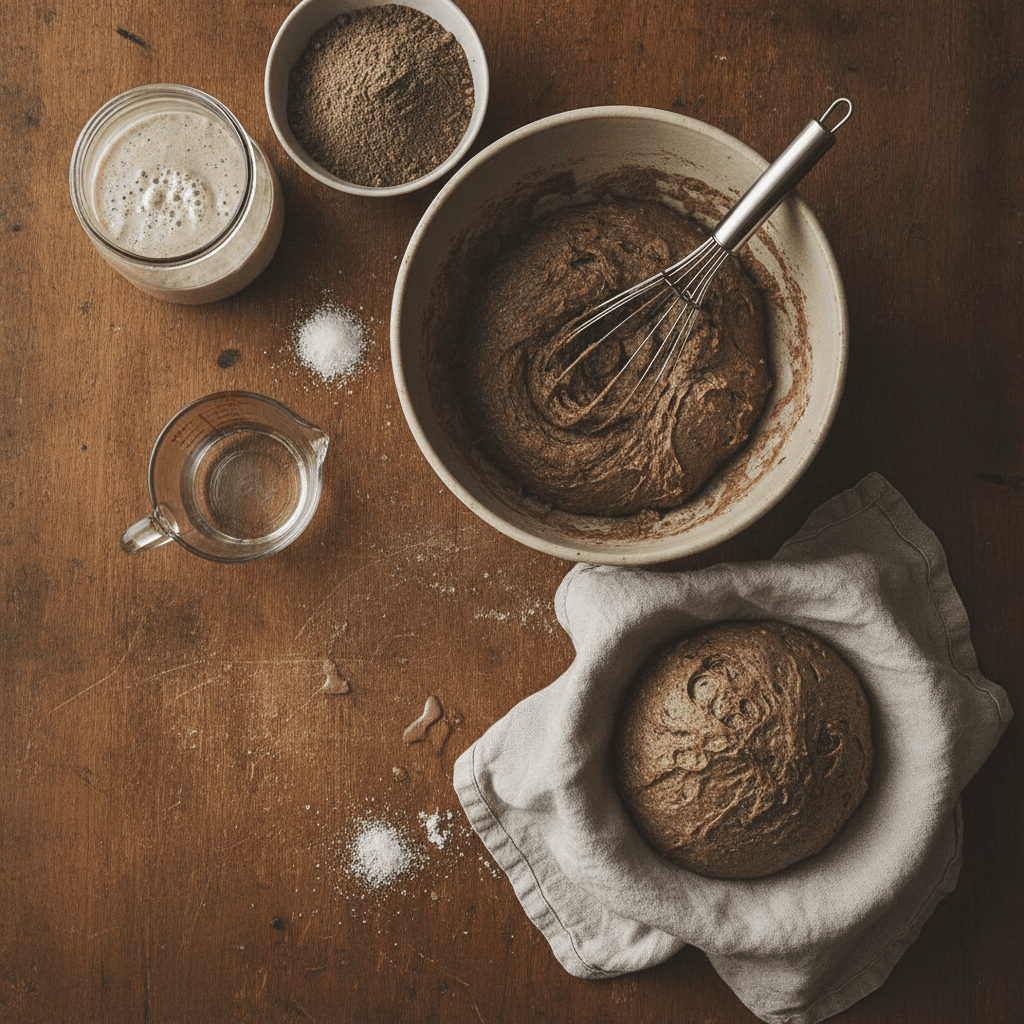
Combine 200g active sourdough starter, 250g warm water, and 10g fine sea salt in a large mixing bowl. Whisk gently until the salt is fully dissolved and the mixture is well combined.
Step 2
Add 300g whole rye flour to the wet ingredients. Using a sturdy spoon or a Danish dough whisk, mix thoroughly until no dry flour remains and a shaggy, cohesive dough forms. Avoid overmixing.
Step 3
Cover the bowl with a damp cloth or plastic wrap and let the dough rest for 30 minutes. This autolyse period allows the flour to fully hydrate.
Step 4
After resting, wet your hand slightly and perform a series of gentle stretch and folds. Reach under the dough, pull a section up, and fold it over the top. Rotate the bowl and repeat 4-6 times.
Step 5
Cover the bowl again and allow the dough to bulk ferment at room temperature (around 70-75°F / 21-24°C) for 4-6 hours. During this time, the dough should visibly increase in volume by approximately 20-30%. According to a study by the Journal of Cereal Science, optimal rye dough fermentation often occurs at slightly lower temperatures than wheat doughs to prevent over-acidification and ensure a balanced flavor.
Step 6
Once bulk fermentation is complete, gently turn the dough out onto a lightly floured surface. Shape it into a round or oblong loaf, being mindful that rye dough is less elastic than wheat dough.
Step 7
Carefully transfer the shaped dough into a floured banneton or a bowl lined with a floured kitchen towel. Cover and refrigerate for a cold proof of 12-18 hours. This slow fermentation develops deeper flavors.
Step 8
Preheat your oven to 450°F (230°C) with a Dutch oven inside for at least 30 minutes. Ensuring the Dutch oven is fully preheated is crucial for achieving a good crust.
Step 9
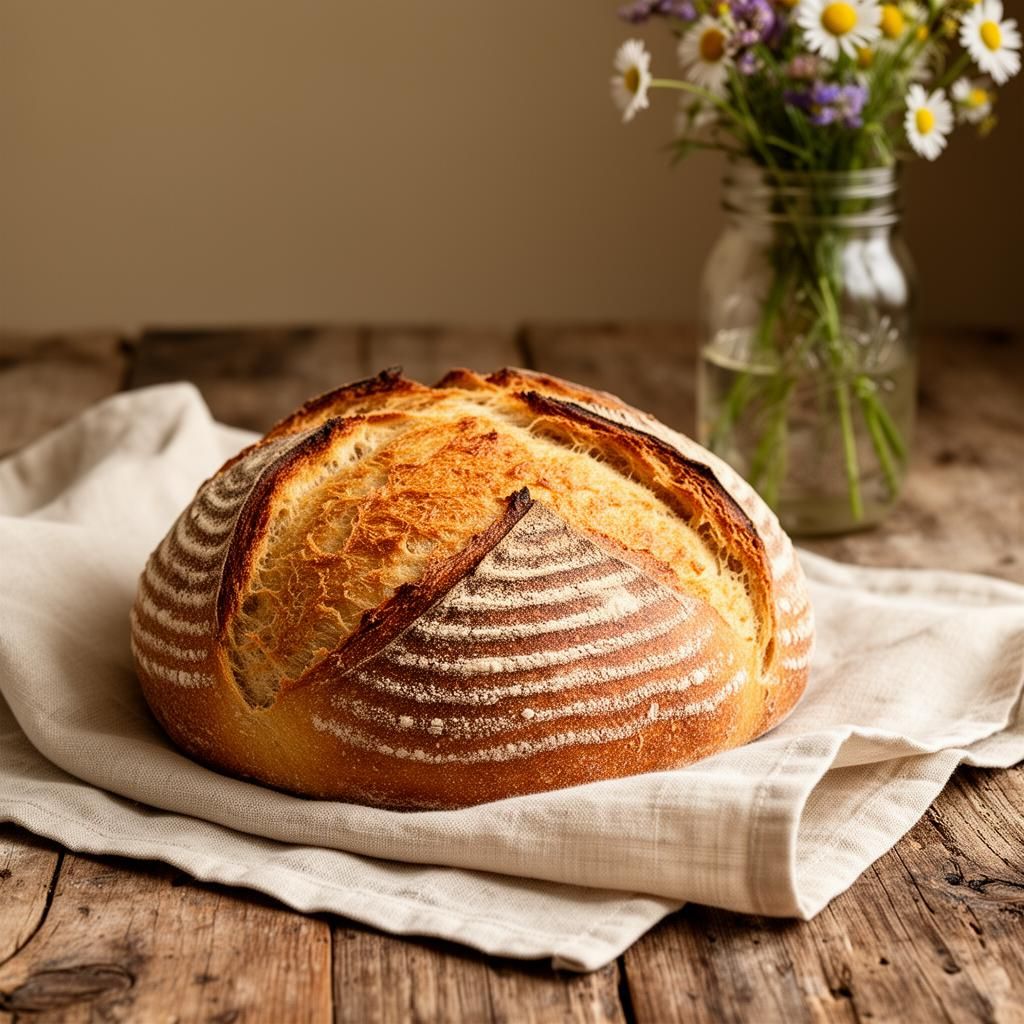
Carefully remove the hot Dutch oven. Gently invert the cold dough from the banneton into the Dutch oven. Score the top of the loaf with a sharp blade if desired, to control expansion.
Step 10
Bake covered for 30 minutes. The steam trapped inside the Dutch oven helps the bread expand and develop a soft crust initially.
Step 11
Remove the lid and continue to bake for another 15-20 minutes, or until the internal temperature of the loaf reaches 200-210°F (93-99°C) and the crust is golden brown.
Step 12
Transfer the baked sourdough rye bread to a wire rack and allow it to cool completely for at least 2-4 hours before slicing. This step is absolutely critical for rye bread, as it continues to set and develop its full flavor and texture during this time.