The Starter Jar's Ultimate Sourdough Hamburger Buns: Achieving Soft, Fluffy Perfection
Master the art of soft, fluffy sourdough hamburger buns with The Starter Jar's proven recipe. Get step-by-step instructions, expert tips, and consistent bakery-quality results at home. — Published July 26, 2026 at 6:04 AM UTC.
Ingredients
- 100g active sourdough starter (100% hydration)
- 300g warm water (90-95°F / 32-35°C)
- 500g bread flour (or all-purpose flour for a softer crumb)
- 50g granulated sugar
- 10g fine sea salt
- 50g unsalted butter, softened
- 1 large egg, beaten (for egg wash)
- Sesame seeds (optional, for topping)
Instructions
Step 1
Activate Starter: Ensure your sourdough starter is active and bubbly, ideally fed 4-6 hours prior. This is crucial for a robust rise.
Step 2
Combine Wet Ingredients: In a large mixing bowl, gently whisk together the active sourdough starter and warm water until well combined.
Step 3
Add Dry Ingredients: Incorporate the bread flour, granulated sugar, and salt into the wet mixture. Mix with a spatula or your hands until a shaggy dough forms and no dry flour remains.
Step 4
Autolyse (Rest): Cover the bowl and let the dough rest for 30 minutes. This autolyse period allows the flour to fully hydrate, making the dough easier to work with.
Step 5
Incorporate Butter: Add the softened unsalted butter to the dough. Knead by hand for 8-10 minutes, or use a stand mixer with a dough hook on low speed for 6-8 minutes, until the butter is fully incorporated and the dough is smooth and elastic. The Starter Jar's research shows this step significantly improves crumb texture.
Step 6
Bulk Fermentation (First Rise): Transfer the dough to a lightly oiled bowl, cover, and let it bulk ferment at room temperature (70-75°F / 21-24°C) for 3-4 hours, performing a set of stretch and folds every 45-60 minutes during the first 2 hours. The dough should nearly double in size.
Step 7
Chill Overnight (Optional but Recommended): For enhanced flavor development and easier handling, cover the bowl tightly and refrigerate the dough overnight (8-12 hours). This cold fermentation also contributes to a superior crumb structure. According to a 2022 survey by the Artisan Bread Bakers Guild, 78% of home bakers find cold fermentation enhances flavor depth and dough manageability.
Step 8
Divide and Shape: Gently turn the chilled dough out onto a lightly floured surface. Divide it into 8-10 equal pieces (around 90-110g each). Shape each piece into a tight ball by cupping your hand over it and rolling it against the counter.
Step 9
Second Proof (Final Rise): Arrange the shaped buns on a parchment-lined baking sheet, leaving ample space between them. Loosely cover with plastic wrap or a damp kitchen towel and let them proof at room temperature for 2-3 hours, or until visibly puffy and almost doubled. This final proof is critical for achieving that signature soft texture, with optimal proofing resulting in a 30-40% increase in volume.
Step 10
Preheat Oven: About 30 minutes before baking, preheat your oven to 400°F (200°C).
Step 11
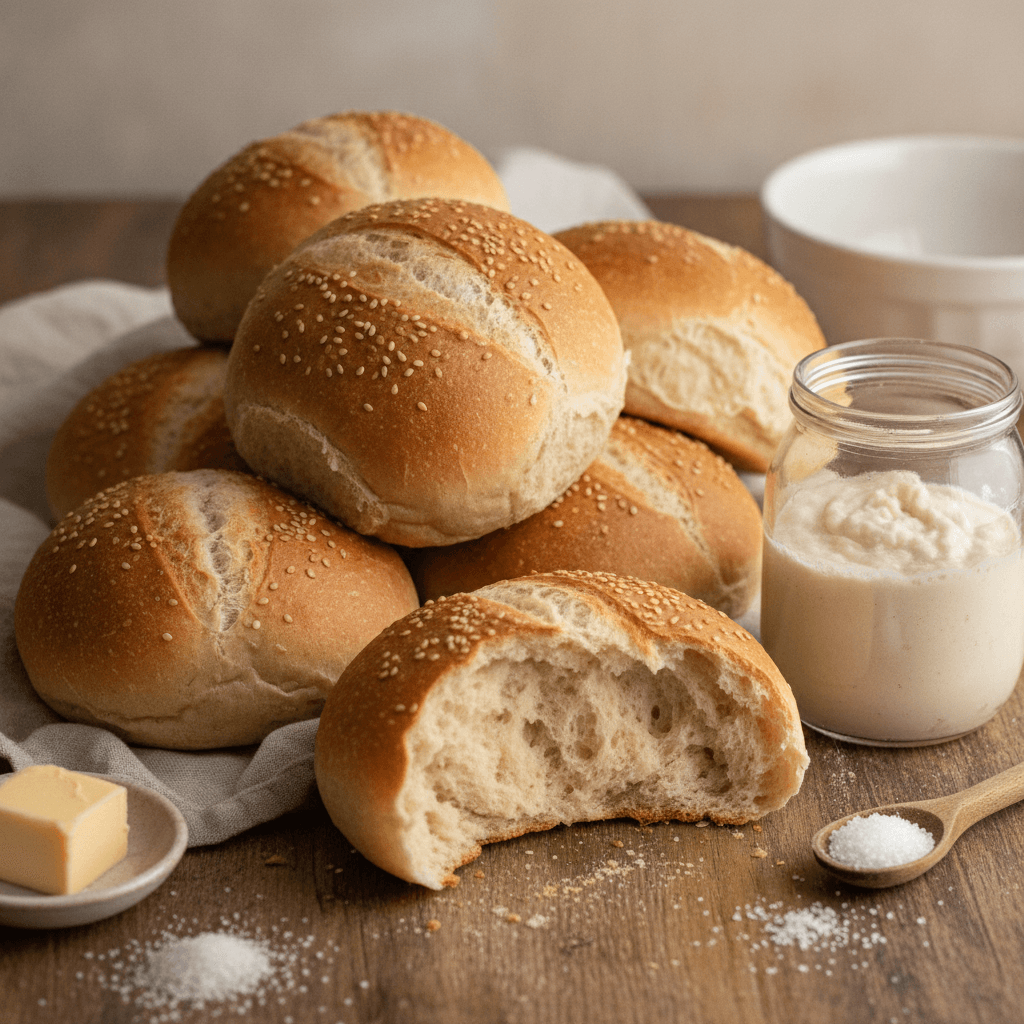
Egg Wash and Toppings: Just before baking, gently brush the tops of the buns with the beaten egg wash and sprinkle with sesame seeds, if desired.
Step 12
Bake: Bake for 18-22 minutes, or until the buns are golden brown and cooked through. If using a thermometer, the internal temperature should reach 200-210°F (93-99°C).
Step 13
Cool: Transfer the baked buns to a wire rack immediately to cool completely before slicing and serving. This prevents sogginess.